
A shopper searches for running socks that stay comfortable in hot weather. Your buying guide appears, they click, and they spend a few minutes comparing merino with synthetic fabrics. Then they leave without buying.
That visit isn’t necessarily a failure. The shopper may have found useful advice and still need help choosing a pair. The missed opportunity is giving them no useful way to continue that decision after they close the page.
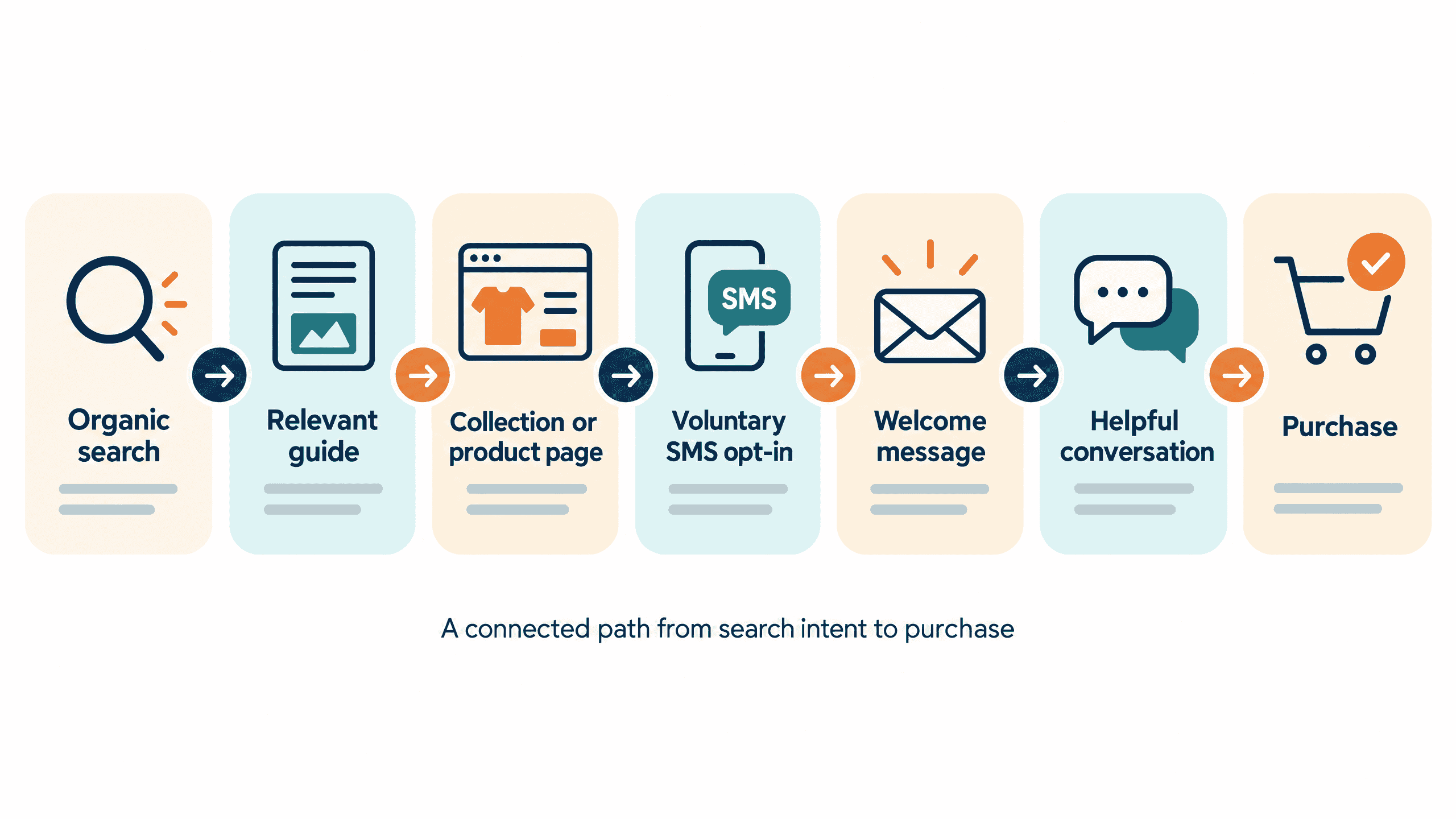
An effective Shopify funnel connects those moments. Search brings someone with a specific question to your store. The page helps them understand their options. An optional SMS signup lets them carry that help into a conversation.
Here’s how that journey could work for Northstar Trail, a fictional running-sock store, and how to build a version around your own products.
Start with the question that brings shoppers to your store
“Running socks” and “merino or synthetic socks for hot weather” point to different needs. Someone using the first phrase might want to browse a collection. Someone asking the second needs help understanding a trade-off before choosing a product.
Northstar Trail’s guide should answer that comparison clearly, then link to suitable socks. Sending the same visitor straight to a collection would leave them to work out the differences alone.
Use keyword research to understand how shoppers phrase those questions, then match the page to what they need. A material comparison belongs in a buying guide; someone searching for a specific sock may be better served by its product page.
Once that purpose is clear, SearchPie can support the keyword research and metadata work. Write the title and description around the question the page actually answers, so shoppers know what to expect before they click.
The visitor should recognize the connection immediately. A search about hot-weather socks should lead to advice about breathability, cushioning, and fit, with a clear route to the products discussed.
Some readers will be ready to shop. Others will want to compare a little longer. Both should have a useful next step.
Give search engines clear information about the page
For that guide to attract search visitors, search engines need to discover it and understand its content. Two parts of that work deserve separate attention.
Schema helps describe the products behind the advice
A shopper comparing socks may also want to know the price, availability, reviews, and shipping terms. Structured data gives search engines a machine-readable description of those details.
SearchPie supports Product markup, including price and review information, as well as FAQ and delivery-and-returns markup. On product pages, keep the markup consistent with what shoppers can see. A sale price or shipping policy in the markup should match the current offer.
This can support eligibility for relevant rich results, although their appearance is Google’s decision. For AI search, Google’sguidance on AI features says no special schema is required for AI Overviews or AI Mode. Accurate product information is a sound foundation; it isn’t a promise of citations in Google, ChatGPT, or Perplexity.
Technical SEO helps search engines reach the right pages
A useful guide can still be difficult to discover if no other pages link to it, it’s accidentally blocked from indexing, or its product links are broken.
Check those basics when publishing. SearchPie’s broken-link tools and Google Search Console features support this maintenance. Its IndexNow support can notify participating search engines when URLs are added or changed.
Treat notification and indexing as separate steps. IndexNow doesn’t guarantee indexing, and Google’s index status should be checked in Search Console. “Instant indexing” should never be treated as a guaranteed publication outcome.
With that foundation in place, the next question is whether the page delivers what the search result promised.
Make the landing page useful before asking for a phone number
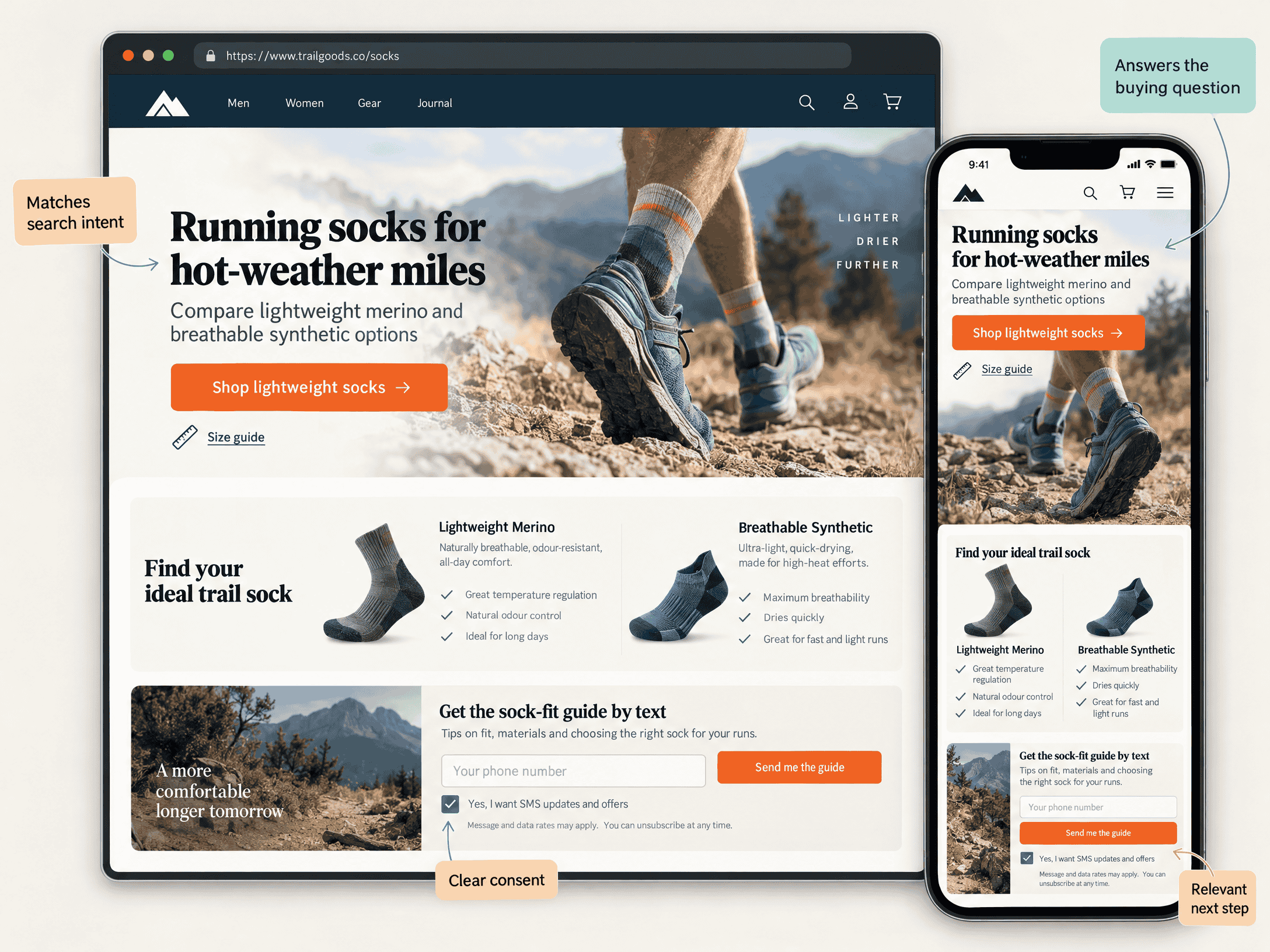
Northstar Trail’s visitor came to compare socks. Opening with a signup popup that covers the comparison would put the store’s request ahead of the shopper’s reason for visiting.
Let the page earn their attention first. Explain how the materials differ, show suitable pairs, and make sizing and product links easy to find. PieLab’sSEO and CRO guide explores why the expectation created in search needs to carry through to the page.
Use images that answer buying questions
For socks, a distant lifestyle shot can’t show everything a shopper needs. Closer views can reveal cushioning, seams, cuff height, and how the sock sits inside a shoe.
Describe informative images with useful ALT text, such as “Lightweight merino running sock in forest green, side view.” SearchPie’s bulk and AI-assisted ALT tools can reduce repetitive catalog work, but the descriptions still need to match the images.
On multilingual stores, review ALT text in the storefront’s language. Google’s image SEO guidance explains how descriptions and page context help it understand images, without guaranteeing Google Images rankings.
Keep those images from slowing down the visit
Large image files can make a useful comparison frustrating to load. SearchPie provides compression, an Auto Compress option for newly added product images, and restore controls if a result is unsuitable. Check that fabric details remain visible after compression.
Then test the whole page on a phone. Follow a product link, choose a size, and add it to the cart. Image optimization, lazy loading, and code minification can support performance, but the buying path still needs checking after changes.
Google’s Core Web Vitals targets provide a practical baseline:
- Largest Contentful Paint: 2.5 seconds or less.
- Interaction to Next Paint: 200 milliseconds or less.
- Cumulative Layout Shift: 0.1 or less.
Assess these at the 75th percentile of page loads, separately for mobile and desktop. They help you evaluate loading, responsiveness, and visual stability alongside the page’s usefulness.
Offer an SMS signup that continues the same decision
Once the comparison has helped the reader, an invitation to get the sock-fit guide by text makes more sense.
That guide needs a purpose beyond repeating the page. Northstar Trail could offer a compact reference covering material choice, cushioning, cuff height, and sizing: something the shopper can keep handy while comparing pairs or checking their size.
The main buying advice stays public. Subscribing offers a convenient reference and a way to ask for help.
The same principle applies elsewhere in the store:
TxtCart’s list-growth tools include popups and other opt-in methods. Use a placement that fits the visit, such as an invitation after the comparison, while keeping shopping links available. These SMS opt-in examples offer a starting point for the wording and format.
Explain what messages the person is agreeing to receive. Someone requesting a restock alert shouldn’t unknowingly join a broader promotional list. Keep consent boxes unchecked by default; Shopify’s checkout guidance explicitly prohibits preselecting its SMS marketing checkbox. Use the appropriate disclosures and consent process for your markets.
Before publishing the form, decide how its signup context will reach your welcome flow. A guide signup and a restock request should lead to different messages. That depends on your form data and configured rules, rather than identifying someone’s original Google search.
Make the first text worth signing up for
The shopper has now trusted Northstar Trail with their phone number. Sending an unrelated sale announcement before the promised guide would break the connection that brought them this far.
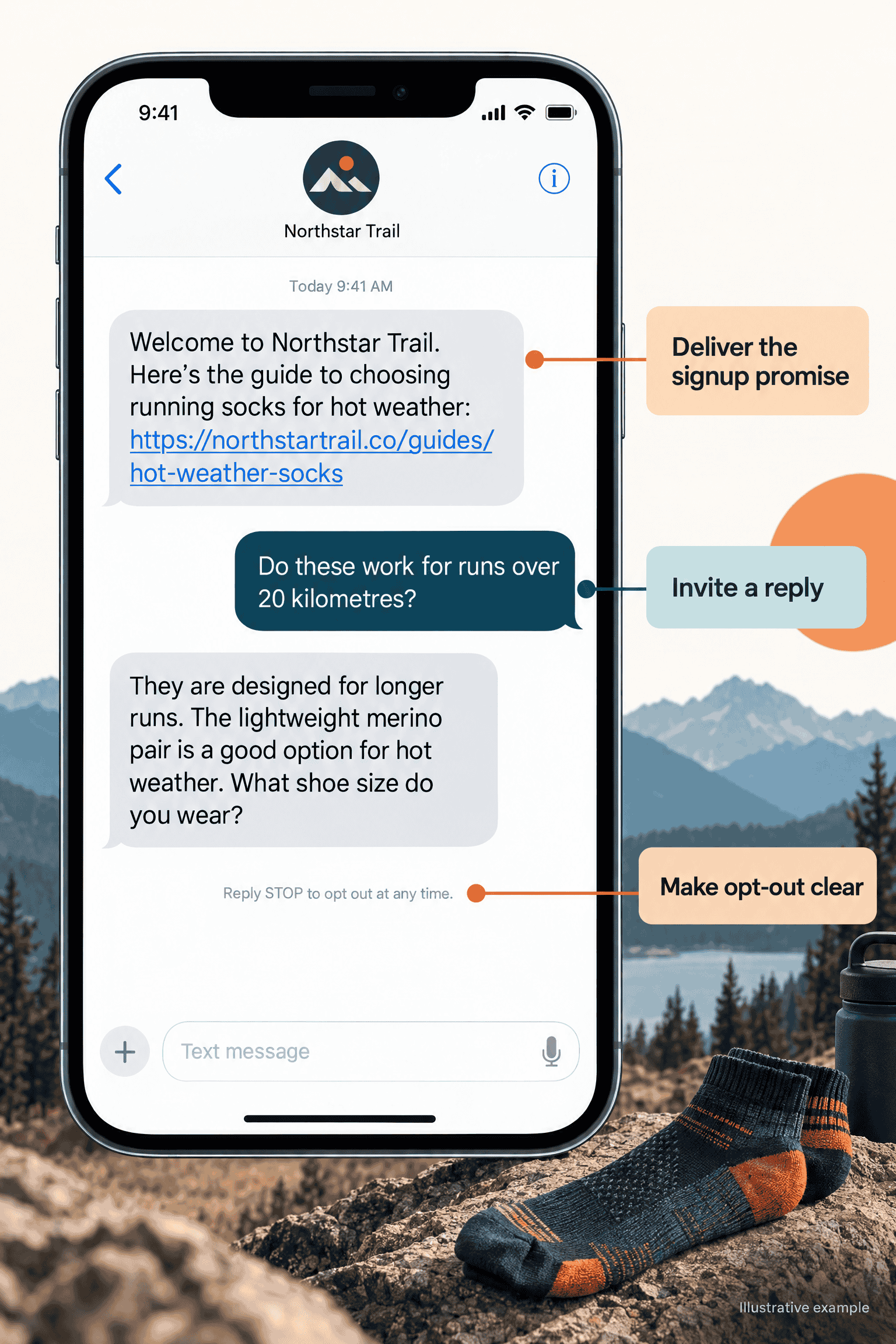
The welcome message should identify the store, deliver the guide, and make the next step clear. If the shopper needs more help, they should know they can reply.
TxtCart’s welcome flows can deliver the initial message and configured follow-ups. Its AI Agent can answer product questions and recommend products through two-way SMS, with the team able to monitor conversations or take over.
For a small team, that creates a way to help shoppers who are interested but still deciding. An illustrative exchange might look like this:
Northstar Trail: Welcome to Northstar Trail. Here’s the guide to choosing running socks for hot weather: [guide link]. Reply STOP to opt out.
Shopper: Do these work for runs over 12 miles?
Northstar Trail: They are designed for longer runs. The lightweight merino pair is a good option for hot weather. What shoe size do you wear?
The product details here are fictional, but the conversation shows the job: answer the question, then gather the information needed to help with fit.
A later follow-up can ask whether an eligible subscriber still needs help choosing. Configure the timing around subscriber expectations and applicable sending rules, and stop the pre-purchase sequence when they buy or opt out. Questions the available product information can’t resolve should go to a person.
Measure whether the journey helps shoppers move forward
A larger SMS list is useful only if the people joining find value in the messages. Review the landing page and its subscribers together over a consistent period.
If the guide attracts relevant visits but few signups, investigate the offer and its placement. A strong signup rate followed by early opt-outs suggests that the messages may not match the promise. Replies can reveal missing product information even when sales reports don’t explain the hesitation.
Keep the measures clear:
- Signup rate: confirmed signups divided by landing-page sessions, or by form views. Choose the denominator and use it consistently.
- First purchases: purchases among that subscriber group within a defined period.
- Replies and opt-outs: whether follow-up creates useful conversations or unwanted messages.
Where tracking and consent permit, retain the landing-page context with the signup and use tagged links for later SMS visits. This helps connect the stages. Search Console reports aggregate queries rather than each subscriber’s search history.
SMS-attributed revenue shows sales credited under an attribution rule. To estimate how many additional purchases messaging caused, you need a suitable experiment, such as a randomized holdout where volume permits. Simply comparing subscribers with non-subscribers doesn’t isolate that effect.
If shoppers keep clicking but struggle to buy, PieLab’s Shopify conversion guide can help you examine the wider storefront experience.
Build the first journey around one useful page
You don’t need to rebuild your store to connect organic search and SMS. Start with one page that already attracts relevant visitors. Make sure it answers their question, helps them explore suitable products, and works well on mobile. Then offer a useful reason to stay in touch and make the first text deliver on it.
SearchPie can support the page’s search and technical foundations, while TxtCart helps you continue the conversation after a shopper subscribes. What connects them is an understanding of what that person still needs before buying.
For Northstar Trail, a search about hot-weather socks becomes a conversation about longer runs and fit. Look for that same connection in your store: the question that brings someone in, the uncertainty that remains, and the help you can offer next. That’s a practical place to begin, and a useful basis for deciding what to improve as shoppers respond.