
Walk into any successful retail store and notice how every product placement is deliberate. The display near the entrance, the sale items at eye level, the color-coordinated sections that pull you deeper into the store. None of it is accidental. That is visual merchandising at work.
Now picture translating that same strategic thinking to your Shopify store. That is exactly what digital visual merchandising does, and for most ecommerce merchants, it is the difference between a store that browsers pass through and one that buyers return to.
This guide answers what visual merchandising is in plain terms, explains why it matters more than most Shopify merchants realize, and gives you seven practical strategies you can apply to your store today.
Summary
- Section 1: What Is Visual Merchandising
- Section 2: Why Visual Merchandising Directly Affects Your Shopify Revenue
- Section 3: 7 Proven Visual Merchandising Strategies
- Section 4: Visual Merchandising Tools Worth Considering
- Section 5: How to Measure Visual Merchandising Performance
What Is Visual Merchandising
In traditional retail, visual merchandising is the practice of presenting products in a way that maximizes sales. It covers everything from shelf layout and lighting to signage, product grouping, and the path customers walk through a store.
In ecommerce, visual merchandising applies the same principles to a digital store. Instead of physical shelf placement, you are deciding which products appear at the top of collection pages. Instead of in-store signage, you are choosing which labels, badges, and banners appear on product listings. Instead of store layout, you are designing the navigation flow that guides shoppers from landing page to checkout.
Visual merchandising in traditional retail vs. ecommerce:
Understanding what merchandising means in this context helps clarify why it is not a cosmetic concern for Shopify stores. It is a direct revenue driver.
Why Visual Merchandising Directly Affects Your Shopify Revenue
The business case for investing in visual merchandising is not abstract. The data points to direct, measurable revenue impact.
- Personalized product recommendations driven by merchandising strategy convert at up to 5.5 times the rate of non-personalized alternatives. For a Shopify store doing $50,000 in monthly revenue, that difference in conversion rate is not a rounding error — it’s the gap between a store that grows and one that stagnates.
- Site search optimization, which is part of merchandising, converts at 4.63% compared to the average site-wide rate of 2.77%. Shoppers who use your search function are already high-intent buyers, and how your store responds to that search query is a visual merchandising decision.
- Product image quality influences purchase decisions for 90% of online shoppers, according to research cited by major ecommerce platforms. Image quality, consistency, and the presence of lifestyle photography versus white background shots are all merchandising decisions.
Why most Shopify stores underinvest in visual merchandising:
Most merchants focus almost exclusively on traffic. They spend money on ads, SEO, and social media to bring shoppers to the store, then leave the in-store experience largely unoptimized. The result is a predictable pattern: high traffic, mediocre conversion rate, high customer acquisition cost, and thin margins.
Visual merchandising fixes the conversion side of that equation. It makes the traffic you already have more valuable before you spend more to bring in additional visitors.
7 Proven Visual Merchandising Strategies for Shopify Merchants
Strategy 1: Optimize Product Placement on Collection Pages
The order in which products appear on your collection pages is one of the most impactful visual merchandising decisions you can make. Most Shopify stores use default sorting, which is typically by creation date or alphabetical order – neither of which is aligned with what actually sells.
Proven collection page sorting approaches:
- Best sellers first – products with the highest sales velocity appear at the top
- Revenue contribution – highest revenue-generating products in the first two rows
- Margin-weighted – high-margin products prioritized for maximum profitability per sale
- Seasonal relevance – products that match the current season or promotional period surface first
- Inventory-aware – out-of-stock or low-stock items move to the bottom automatically
The key principle here is that most shoppers never scroll past the first page of a collection. If your most compelling products are buried on page three, they are effectively invisible to the majority of your traffic.
Time to implement: 30–60 minutes for initial setup. Ongoing review monthly.
Strategy 2: Use Product Labels and Badges Strategically
In physical retail, a brightly colored sale tag catches attention immediately. In ecommerce visual merchandising, product labels and badges do the same job — they communicate information at a glance before the shopper clicks into the product page.
The most effective visual merchandising badges address three things: urgency, social proof, and clarity.
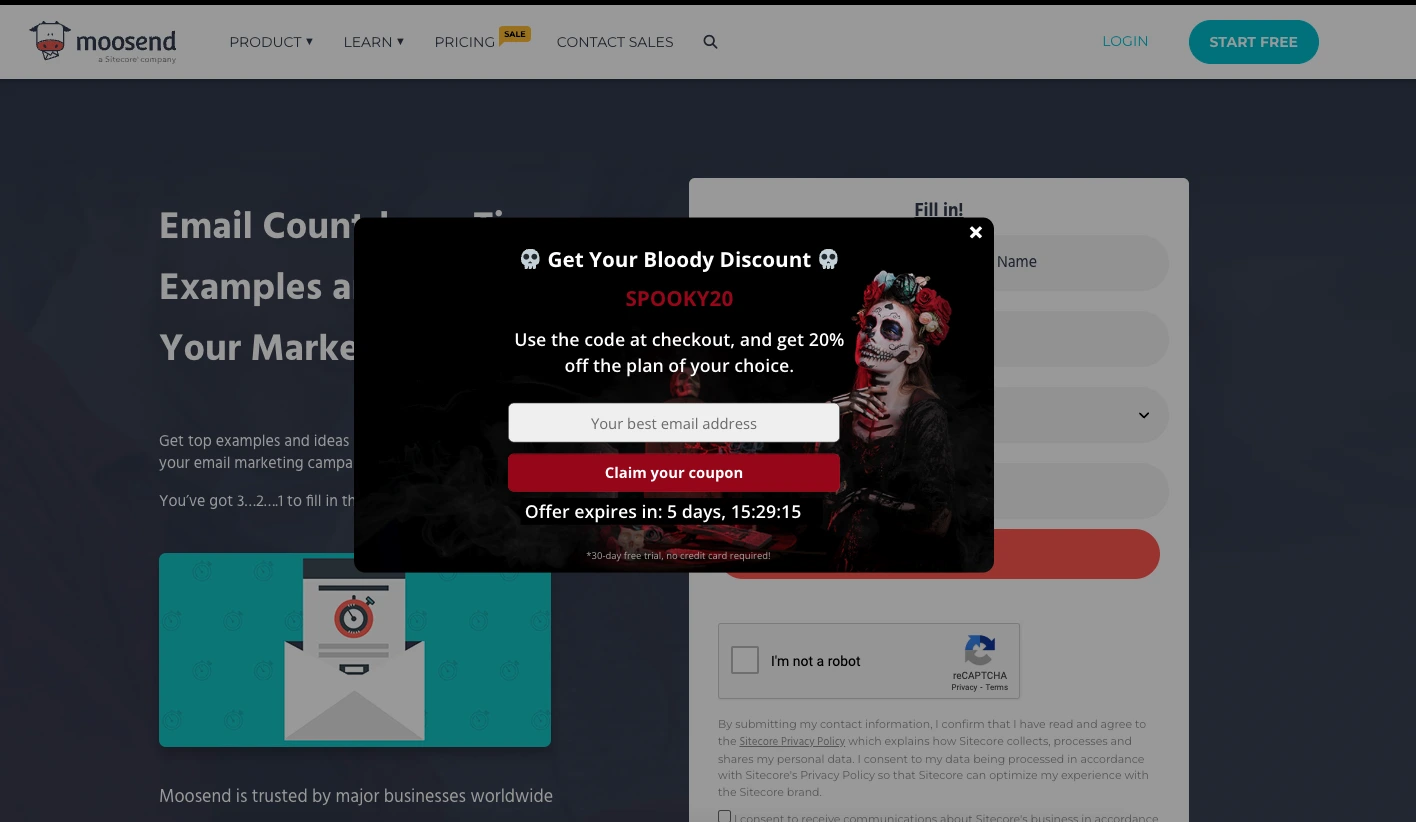
- Urgency badges: “Only 3 Left,” “Selling Fast,” “Sale Ends Tonight,” or countdown timers communicate scarcity and time pressure that encourages faster decisions.
- Social proof badges: “Best Seller,” “Top Rated,” “Customer Favorite,” or star rating displays borrow trust from your existing customer base to persuade new shoppers.
- Clarity badges: “New Arrival,” “Free Shipping,” “Vegan,” or “Made in the USA” communicate specific attributes that help the right shopper self-select into the product quickly.
Before and after for visual merchandising badges:
The combination of urgency and social proof badges is particularly powerful because it addresses two common purchase barriers simultaneously: “Is this worth buying?” and “Should I buy it now or come back later?”
Strategy 3: Prioritize the Above-the-Fold Experience
Heatmap research consistently shows that if key elements like the Add to Cart button or customer reviews appear below the fold, fewer than 15% of visitors will ever see them. Visual merchandising applies directly to what appears within the first screen view on both desktop and mobile.
Above-the-fold checklist:
- Hero image that immediately communicates what you sell and who it is for
- Primary value proposition visible without scrolling
- Add to Cart or Buy Now button within the first screen
- At least one trust signal such as star rating, review count, or security badge
- Current sale or promotion visible if one is running
For mobile, this above-the-fold real estate is even more limited. With mobile accounting for approximately 59% of all online purchases in 2025, your merchandising decisions need to be tested on a real mobile device, not just a desktop browser.
Strategy 4: Optimize Your Site Search for Visual Merchandising
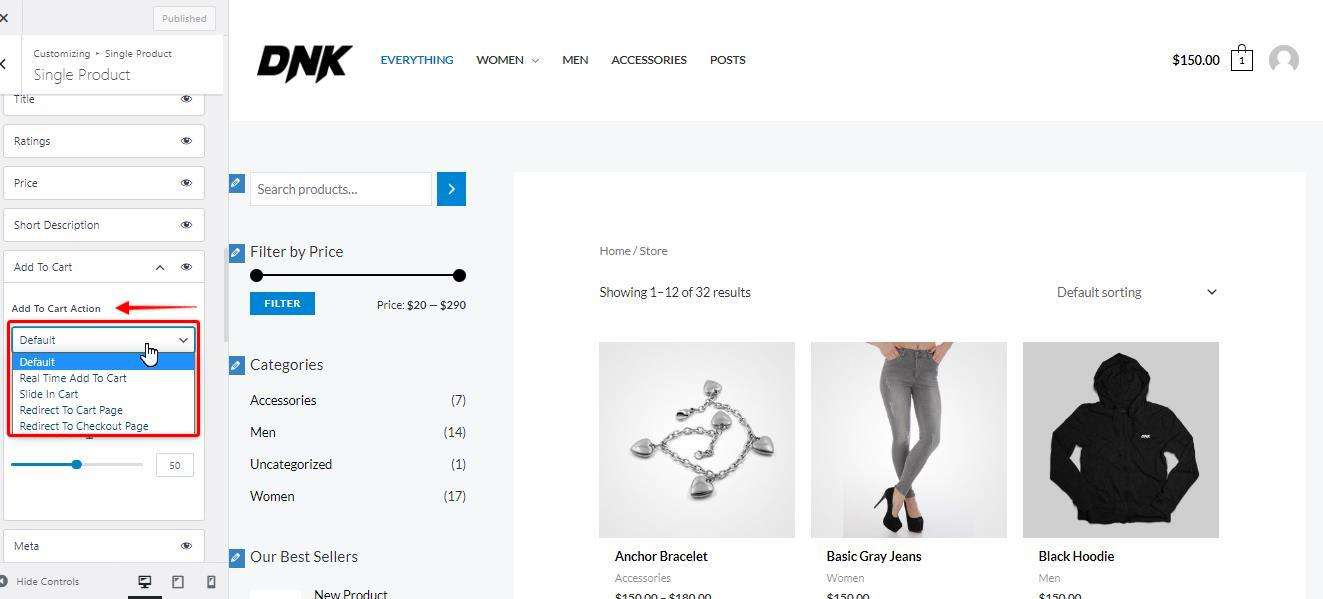
Answering what merchandising means in the context of search functionality surprises most merchants. Search is a visual merchandising channel because you control which products surface for which queries and in what order.
Shoppers who use search convert at 67% above the site average. These are your highest-intent visitors, and the merchandising decision of what they see when they search determines whether that intent converts.
Merchandising decisions within search:
- Which products surface for ambiguous queries like “shoes” or “gifts”
- Whether synonym mapping captures searches for terms you might not use, such as showing “trainers” for “sneakers”
- Whether search results display product images, ratings, and prices in a visual way
- Whether out-of-stock products are hidden from search results automatically
- Whether popular search terms with no good results are flagged for catalog improvement
A merchant with 300 products who invests in search merchandising will often outperform a competitor with 3,000 products who leaves search results on default settings.
Strategy 5: Build a Consistent Visual Identity Across Your Catalog
Visual merchandising is not just about individual product labels or page layouts — it’s about the cumulative impression your store makes across every touchpoint. Inconsistent photography, mismatched brand colors, and different image aspect ratios across products create visual noise that undermines trust and increases bounce rates.
Visual consistency as merchandising strategy:
- All product images use the same background (white, lifestyle, or styled) for the primary image
- Image aspect ratios are consistent across all products so collection page grids align neatly
- Typography in product titles follows a consistent format: brand, product name, key attribute
- Color use in banners, badges, and buttons follows a consistent brand palette
- Image quality is uniform so no single product looks significantly better or worse than others
The practical implication is that this is not only a technology problem — it’s a content and process problem. Building a photography style guide and applying it consistently across your catalog produces one of the most cost-effective merchandising improvements available to growing Shopify stores.
Strategy 6: Implement “Complete the Look” and Cross-Sell Merchandising
One of the highest-impact visual merchandising techniques in physical retail is the styled display. A mannequin wearing a complete outfit sells not just the jacket but the shirt, trousers, belt, and shoes together. The visual presentation of a complete solution increases average order value by making it easy for the shopper to buy the full package.
Digital visual merchandising replicates this through “frequently bought together,” “complete the look,” and cross-sell sections on product pages.
Cross-sell placement best practices:
- Place cross-sell recommendations below the main product description, not above the Add to Cart button
- Show three to four complementary products maximum to avoid overwhelming the shopper
- Use lifestyle images in cross-sell sections rather than white background product shots
- Display the combined price of the product bundle if applicable to make the value clear
- Ensure cross-sells are genuinely relevant – show running socks on a running shoe page, not random products from the same store
The principle here is that shoppers respond to context. Showing products together in a way that makes sense visually and logically increases the likelihood that both items end up in the cart.
Strategy 7: Use Urgency and Personalization to Create Dynamic Merchandising
Static visual merchandising works at a baseline level. Dynamic visual merchandising that adapts to individual shopper behavior and real-time store conditions works significantly better.
Dynamic merchandising examples:
- Countdown timers that reflect the actual time remaining in a promotion, not fake permanent timers
- Stock level indicators that pull from real inventory data so “Only 2 Left” is always accurate
- Recently viewed products surfaced prominently for returning visitors
- Best seller badges that update automatically as sales velocity changes weekly
- Homepage featured products that rotate based on season, promotion, or campaign without manual updates
The reason a dynamic approach outperforms static alternatives is that it’s always accurate and always current. Shoppers have learned to ignore visual elements that appear permanent or fake. A countdown timer that genuinely counts down, a stock indicator that genuinely reflects inventory, and a best seller badge that genuinely reflects purchase behavior all carry credibility that drives action.
Visual Merchandising Tools Worth Considering
Implementing the visual merchandising strategies in this guide requires tools that connect your merchandising decisions to your product catalog, inventory, and customer data.
Key visual merchandising tool categories:
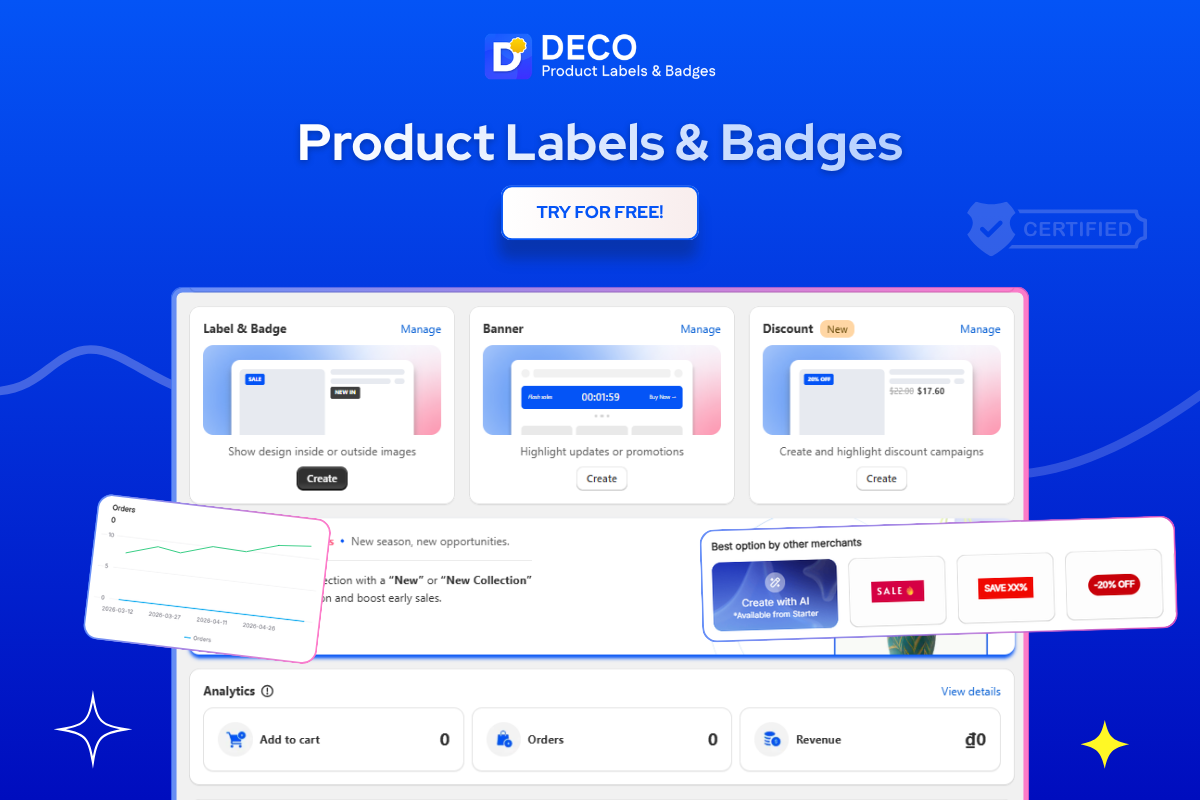
DECO Product Labels and Badges is particularly relevant for Shopify merchants who want to implement merchandising Strategy 2 and Strategy 7 from this guide. DECO lets you add sale badges, countdown timers, stock labels like “Low Stock” and “Selling Fast,” and payment trust badges directly onto product images and collection listings. All labels connect to real inventory and promotion data, so the urgency signals are always accurate.
DECO’s mobile-specific sizing settings ensure labels never overlap the Add to Cart button on smaller screens — a detail that directly protects conversion rates on mobile, where more than half of Shopify traffic originates.
For Shopify merchants building a comprehensive merchandising strategy, DECO handles the on-page urgency and trust signal layer without requiring any code changes or developer time.
How to Measure Visual Merchandising Performance
You cannot improve visual merchandising you do not measure. The good news is that the metrics for evaluating merchandising effectiveness are already available in tools most Shopify merchants already have.
Core visual merchandising metrics:
Testing your changes:
Make one visual merchandising change at a time. If you update badge placement and redesign your collection page in the same week, you won’t know which change drove the result.
Give each test at least four weeks before drawing conclusions — seasonal variation, traffic source changes, and promotional activity all create noise in shorter measurement windows.
The most reliable visual merchandising test compares specific pages against each other: a collection page with urgency badges versus the same collection page without them, or a product page with cross-sell recommendations versus one without. Clean comparisons produce clear answers.
Apply These Visual Merchandising Principles Starting This Week
Understanding what is visual merchandising is the starting point. Applying it to your Shopify store is where the revenue impact happens.
Start with Strategy 2. Add one urgency badge to your highest-traffic collection page and measure the add-to-cart rate change over the following two weeks. This is the fastest visual merchandising improvement with the most immediate measurable result.
Then work through collection page sorting, above-the-fold optimization, and cross-sell implementation in sequence. Each improvement builds on the last and compounds in impact over time.
Visual merchandising is not a one-time project. The best Shopify stores treat it as an ongoing practice of testing, measuring, and refining how products are presented to the shoppers who are already arriving.
The key principles to keep from this guide:
- Visual merchandising in ecommerce applies the same strategic product presentation principles that drive physical retail sales
- Product placement order, label design, above-the-fold elements, and cross-sell recommendations are all visual merchandising decisions
- Dynamic visual merchandising that connects to real data outperforms static elements
- Measurement and testing are what separate merchants who improve continuously from those who implement once and hope for the best
Ready to add urgency labels, trust badges, and dynamic stock indicators to your Shopify store?
DECO’s visual merchandising label and badge features apply across your entire product catalog without any code changes, with mobile-optimized sizing that protects the Add to Cart button on every device.