
A shopper lands on your store. They browse a few products. Then they leave without buying anything.
This happens every single day on nearly every Shopify store. And most of the time, it is preventable. Research shows that 97% of online shoppers actively look for deals before they purchase. That means almost every visitor arriving at your store is already hoping to find a discount. The problem is not that they do not want to buy. The problem is that no one offered them a reason to stay.
A discount popup fixes that. It is a focused overlay that appears at the right moment, presents a relevant offer, and gives shoppers a reason to take action now instead of leaving. Over 60% of successful ecommerce businesses use discount popups because they work. Done correctly, a discount popup does not just collect emails. It converts browsers into buyers and creates urgency that drives immediate sales.
This guide covers the five most effective discount popup types, real examples with actual results, and how to write a discount offer example that does not feel pushy or generic.
Summary
- Section 1: What a discount popup is and why it matters for Shopify merchants
- Section 2: The 5 most effective discount popup types and when to use each one
- Section 3: Real discount popup examples with conversion data
- Section 4: How to write a discount offer example that actually converts
- Section 5: The best Shopify pop up app options including DECO
What Is a Discount Popup and Why Does It Matter
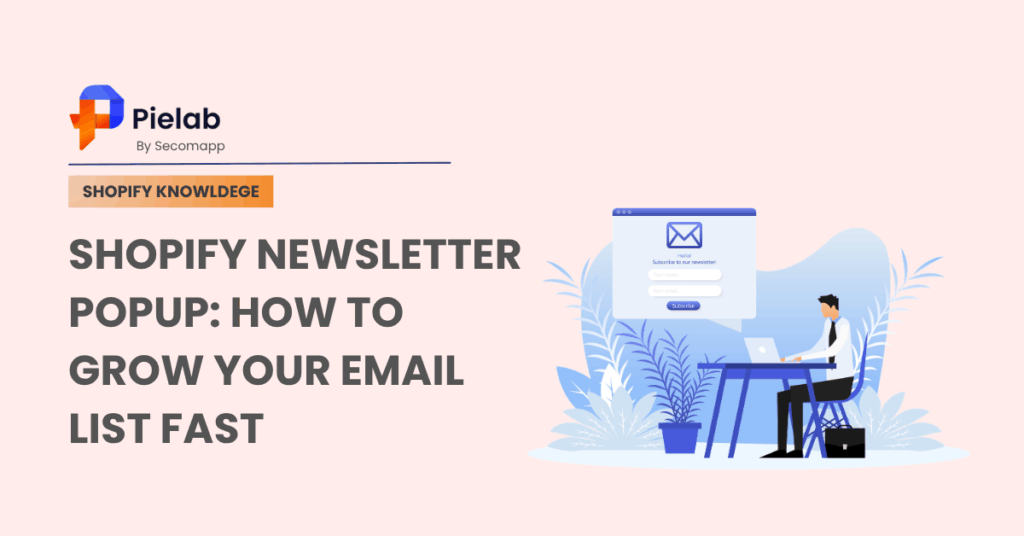
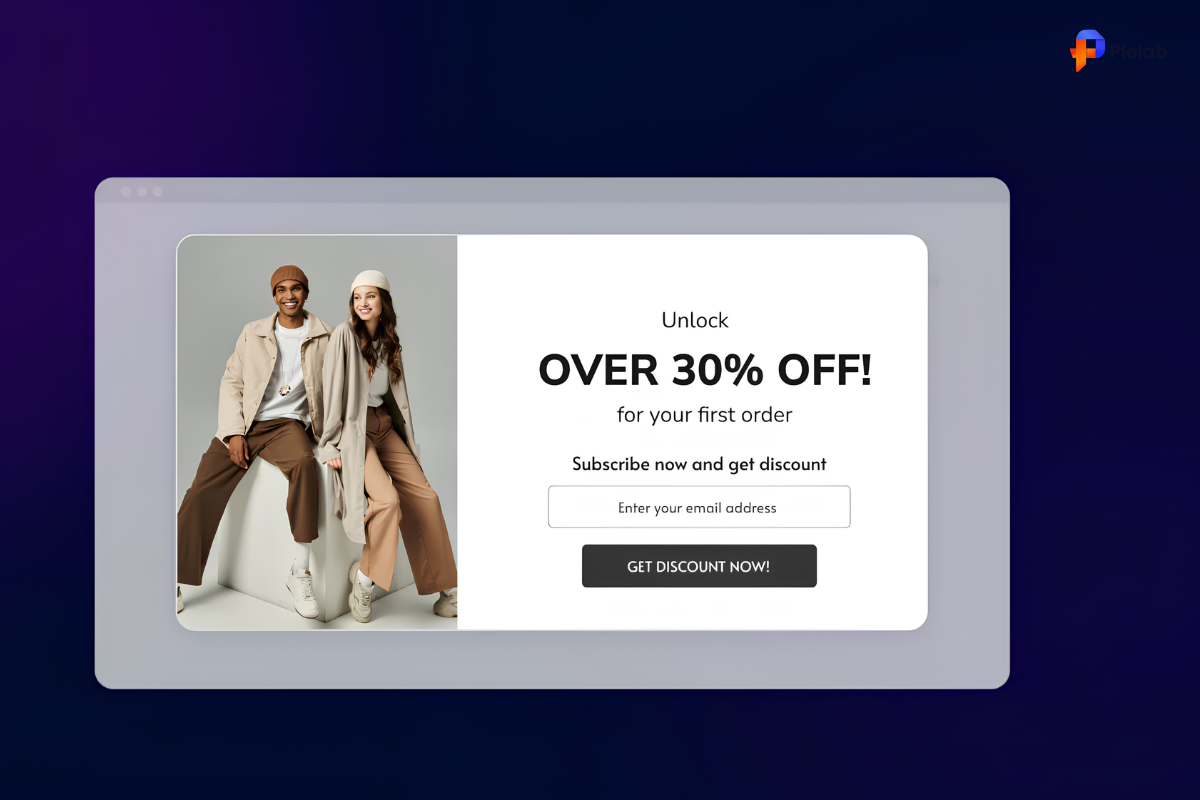
A discount popup is a strategically timed overlay that appears on your store to present a specific offer. That offer might be a percentage discount, free shipping, a free gift, or early access to a sale. In exchange, you typically ask the visitor to share their email address or complete a quick action.
The reason discount popups work so well comes down to timing and intent. A shopper browsing your store is already interested. A discount popup appears at the right moment and gives them the final push they needed.
Here is what a discount popup actually does for your Shopify store.
It stops revenue from leaking. The average Shopify store converts only 2 to 3% of its traffic. That means 97 to 98% of your visitors leave without buying. A well-designed discount popup can convert an additional 10 to 20% of those visitors into email subscribers you can market to long-term.
It builds your email list at the same time. Every visitor who enters their email to claim a discount becomes a contact you can reach again. That contact has already shown buying intent, which makes them far more valuable than a cold lead.
It collects information about your customers. Modern discount popups can ask simple questions before revealing the offer. This gives you data about what shoppers want, which makes your follow-up emails more relevant and more likely to convert.
The 5 Most Effective Discount Popup Types for Shopify
Not every discount popup works the same way. The right type depends on your goal. Here are the five formats that consistently deliver results for Shopify merchants.
Type 1: Email Subscription Popup
This is the most common discount popup format and the best starting point for most stores. It offers a small discount, typically 5 to 15% off, in exchange for the visitor’s email address.
The email subscription popup serves two purposes at once. It builds your list and removes the hesitation that stops first-time shoppers from buying. Once someone is on your list, you can continue marketing to them with future campaigns.
Best for: Building your subscriber base and converting first-time visitors into customers.
When to trigger it: 30 to 45 seconds after a visitor lands on your store, or when they show exit intent on desktop.
Type 2: Subscriber Segmentation Popup
This format goes one step further than a basic email capture. Before revealing the discount, it asks visitors one or two quick questions about their preferences. For example, “What are you shopping for today?” or “Which products interest you most?”
The visitor gets their discount. You get useful data about who they are and what they want. Research shows that segmentation popups can reach completion rates between 20 and 40%. The follow-up emails you send become more targeted and more effective as a result.
Best for: Stores with diverse product ranges that want to personalize their marketing.
When to trigger it: On first visit, after 20 to 30 seconds.
Type 3: Minimum Purchase Popup
This discount popup type focuses on increasing your average order value rather than capturing emails. It presents an offer that only activates when the shopper reaches a specific cart total. For example, “Get 15% off when you spend over $75” or “Free gift with orders above $100.”
The offer gives shoppers a reason to add one more item to their cart. Setting the threshold just above your current average order value is the most effective approach.
Best for: Stores that want to increase how much each customer spends per order.
When to trigger it: When a visitor adds an item to their cart or visits the cart page.
Type 4: Free Shipping Popup
Unexpected shipping costs are the most common reason shoppers abandon their carts. A free shipping popup directly removes that barrier, either unconditionally or after a minimum spend threshold.
Free shipping is often perceived as more valuable than an equivalent percentage discount, and it frequently costs less to offer. This makes it one of the highest-return discount popup types available.
Best for: Stores with high cart abandonment rates or where shipping cost is a known objection.
When to trigger it: On exit intent, or when a visitor reaches the cart page.
Type 5: Customer Referral Popup
This popup type targets existing customers rather than new visitors. It offers a discount to customers who refer a friend, with both the referrer and the new customer receiving a benefit.
Referral popups work because they leverage personal recommendations, which are far more persuasive than advertising. Customers who arrive through referrals also tend to spend more and stay loyal longer.
Best for: Stores with a strong existing customer base looking to grow through word of mouth.
When to trigger it: After a completed purchase or in a post-purchase email flow.
Real Discount Popup Examples With Actual Results
Knowing which type to use is useful. Seeing what real results look like is more useful. Here are proven discount popup examples from brands that tested these strategies.
Frictionless email capture. One luxury beauty brand simplified their discount popup to collect only an email address, removing every extra field. The result was a 167% increase in signups and $600,000 in attributed revenue. The lesson: fewer fields mean less friction and more completions.
Interactive two-step funnel. A wellness brand asked visitors about their health goals before revealing the discount. This approach achieved a 260% increase in signups and a 43% purchase rate from new subscribers. Collecting information before the offer made follow-up emails far more relevant.
Urgency-driven offer. A plant-based food brand added “Limited Time Offer” messaging to their discount popup. This single change increased email signups by 36%. Creating a genuine time limit gives shoppers a reason to act now rather than close the popup and forget about it.
Quiz-based mystery discount. One brand replaced a standard percentage discount with a mystery offer revealed after answering a short quiz. Their signup rate increased from 2.5% to 19%. The curiosity element made the popup feel engaging rather than transactional.
Non-intrusive floating card. Instead of a full-screen overlay, one food brand used a small floating card that stayed visible without blocking content. This approach generated over $100,000 in additional monthly sales without interrupting the browsing experience.
These examples show that the content and format of your discount popup matter as much as the discount amount itself.
How to Write a Discount Offer Example That Converts
Most discount popups fail not because the offer is wrong but because the copy is generic. “Sign up for 10% off” appears on thousands of stores. It no longer feels special.
Here is how to write a discount offer example that stands out.
Lead with the benefit, not the action. Instead of “Enter your email to get 10% off,” try “Save $12 on your first order. Just enter your email below.” The shopper sees what they gain before they see what you want from them.
Be specific about the discount. A dollar amount often converts better than a percentage because it is concrete. “Save $15” is clearer than “15% off,” especially for shoppers who have not yet decided what to buy.
Add a reason for urgency when it is real. “Only available for the next 20 minutes” works when it is true. Fake urgency damages trust. If you are running a genuine sale or the offer expires at midnight, say so clearly.
Keep the copy short. Your discount popup should communicate the offer in one or two sentences. Every extra word increases the chance the shopper closes the popup before reading the important part.
Before / After table:
Time to write strong popup copy: 20 to 30 minutes. Test two versions against each other and check results after 1,000 visitors before deciding which to keep.
The Best Shopify Pop Up App Options
The Shopify pop up app you choose determines how much control you have over timing, design, targeting, and performance tracking. Here are the best options for Shopify merchants.
DECO: Visual Trust and Urgency Built Into Your Store
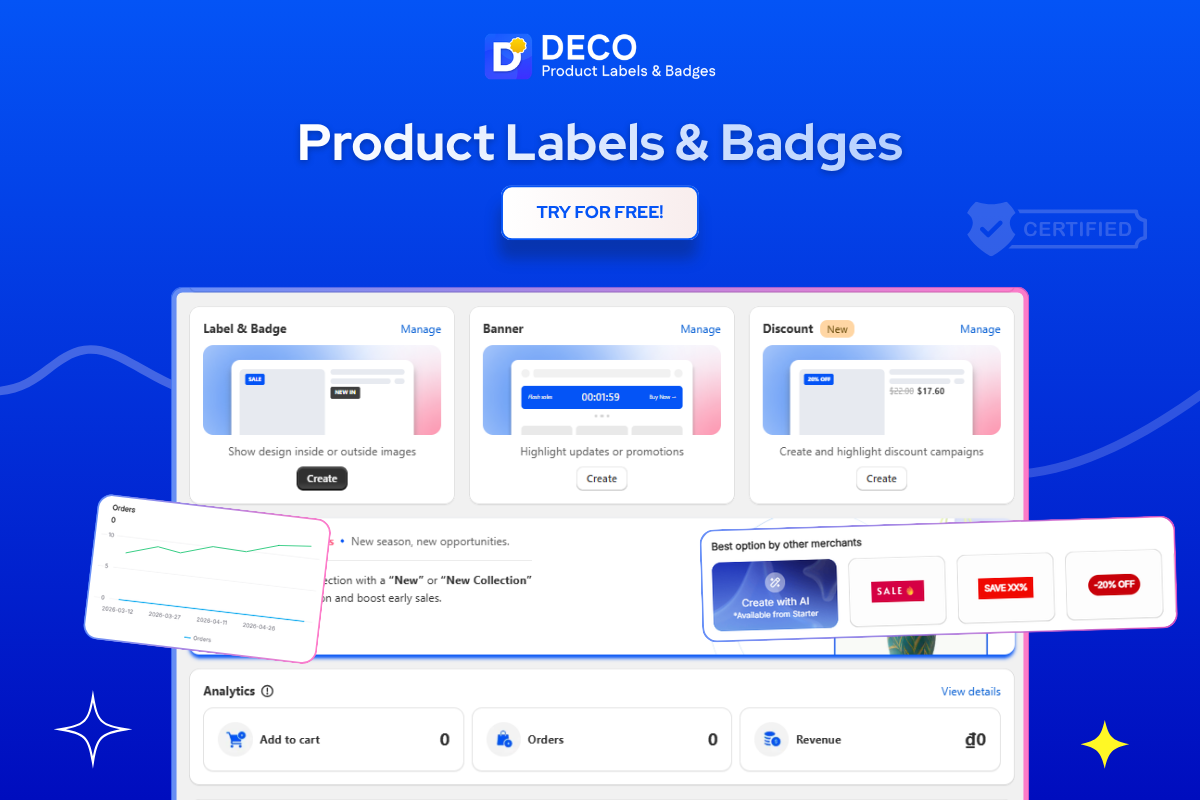
DECO is the best choice for Shopify merchants who want their discount popup to work alongside visual trust signals and urgency cues across the entire store, not just on a single popup.
DECO’s Countdown Timer labels let you add live timers to product pages and cart views to create genuine urgency around limited-time discount offers. When a shopper sees a countdown timer alongside a discount popup, the two work together to drive faster decisions. Seeing “Offer ends in 14:32” next to a “Save $20” popup is far more persuasive than either element alone.
DECO’s stock labels such as “Low Stock” and “Selling Fast” reinforce scarcity at the product level, which gives your discount popup more context and credibility. Shoppers who see that a product is nearly sold out are more motivated to claim the discount before it is gone.
DECO’s Payment Trust Badges let you display payment method icons (Visa, Mastercard, PayPal, and regional options like GCash, Tamara, and Mada) directly below your “Add to Cart” button or within your cart. When a shopper claims a discount popup offer, seeing familiar payment icons immediately reduces the hesitation that can still prevent checkout.
DECO’s Banner Bars can be configured to support your discount popup campaign by directing shoppers to your current promotion page or highlighting a free shipping threshold, which reinforces the offer without requiring a second popup.
Best for: Shopify merchants who want urgency, trust signals, and discount promotion working together across the full store experience without requiring separate apps for each.
Alia
Alia is built for stores that want AI-powered discount popup optimization. It uses smart exit-intent triggering that learns from visitor behavior and automatically tests different popup versions. Brands using Alia report average opt-in rates of 15 to 20%. It is a strong option for high-volume stores ready to invest in automated optimization.
Wisepops
Wisepops offers over 150 discount popup templates and sophisticated audience targeting rules. It is a good fit for stores that want deep customization and context-specific display rules, such as showing different popups to visitors from different traffic sources or different geographic regions.
TA Banner Slider, Sale Popup
TA Banner Slider uses floating card-style popups that do not block screen content. It is a good option for stores where the brand positioning makes aggressive overlays feel out of place. The non-intrusive format works well for premium brands that want to present discount offers without interrupting the browsing experience.
How to Know If Your Discount Popup Is Working
Timeline: Discount popup conversion rates show up immediately in your app dashboard. Revenue impact from email subscribers takes 4 to 8 weeks to measure accurately. Do not change your popup copy or design after fewer than 1,000 impressions. Let the data build before drawing conclusions.
FAQs
A Discount Popup is a promotional message that appears on your Shopify store to offer shoppers discounts, free shipping, or special deals in exchange for an action like entering their email.
Yes. Well-timed Discount Popups can reduce cart abandonment, increase email signups, and improve conversion rates by giving shoppers a reason to buy immediately.
Most Shopify stores trigger Discount Popups after 20–45 seconds, on exit intent, or when shoppers add products to cart.
Free shipping, fixed-dollar discounts, and first-order offers usually perform best because shoppers immediately understand the value.
Not always, but Shopify popup apps make it easier to control timing, targeting, design, and urgency features without coding.