
Your Shopify store could have perfect product pages, fast loading times, and optimized meta tags, and still struggle to rank on Google. The missing piece is often a strong backlinks profile built on genuine dofollow backlinks that signal to search engines your store is trustworthy and worth ranking highly.
A dofollow backlinks is a link from another website to yours that passes real SEO value. When reputable sites link to your store with one, they are effectively telling Google that your content is worth trusting. Google uses those signals to decide which pages deserve higher rankings. More high-quality dofollow backlinks to your product and collection pages means more organic traffic, more qualified shoppers, and more sales without increasing ad spend.
This guide covers exactly what a dofollow backlinks is, how it differs from a nofollow link, how to check your backlinks, and five proven ways to build links that actually move your rankings.
Summary
- Section 1: What a dofollow backlinks is and how it works
- Section 2: Dofollow vs nofollow links and why the difference matters
- Section 3: How to check your backlinks correctly
- Section 4: 5 proven ways to build dofollow backlinks for your Shopify store
- Section 5: SearchPie features that support your backlinks and SEO strategy
What Is a Dofollow Backlinks and How Does It Work
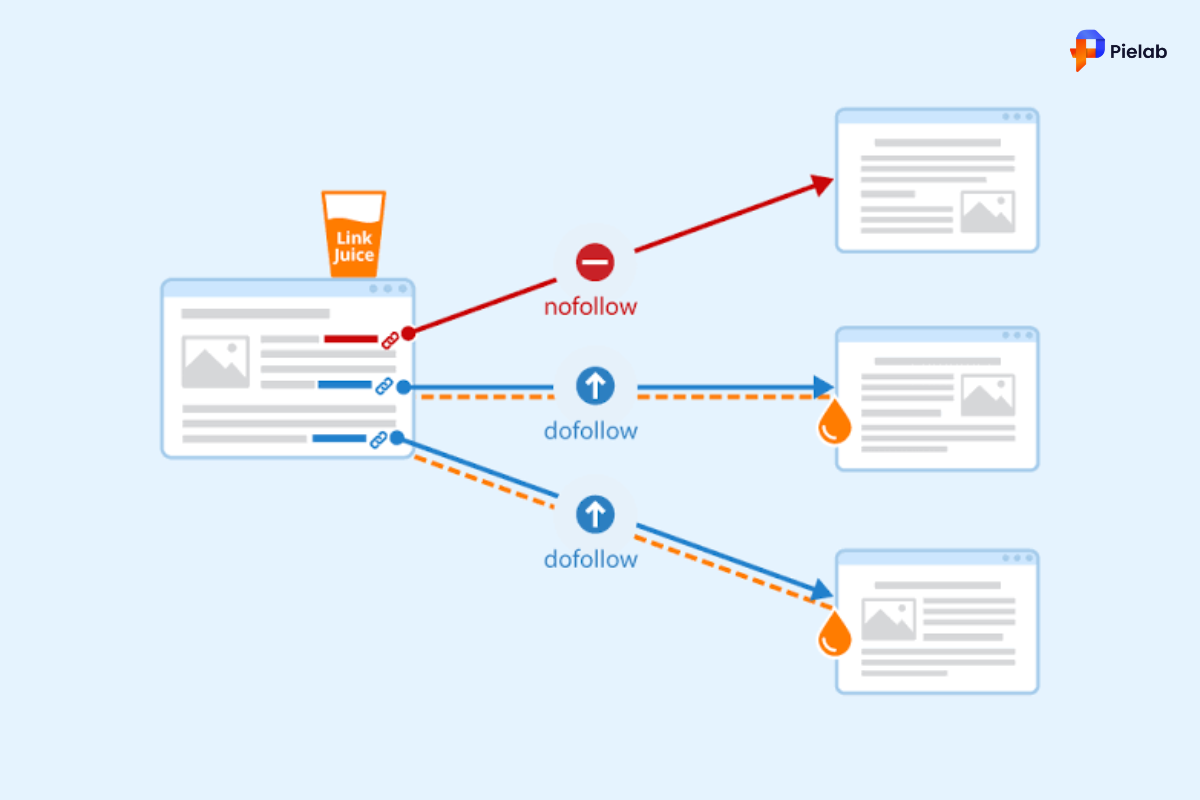
A dofollow backlinks is a link from one website to another that instructs search engine crawlers to follow the link and pass SEO authority from the linking site to the target site. That authority transfer is commonly called link juice or link equity.
Think of it as a vote of confidence. When a reputable backlink website links to your Shopify store this way, it signals to Google that your store is credible and worth directing its own audience toward. Google takes those signals seriously because a trustworthy site has its own reputation on the line when it sends visitors somewhere new.
The more of these links your store earns from high-authority backlinks websites, the more trust signals Google sees, and the higher it ranks your pages. A product page with five such links from respected industry blogs will typically rank significantly higher than an identical page with zero links, even if the on-page SEO is the same.
For Shopify merchants, this makes dofollow backlinks not just a technical SEO detail but a direct driver of organic traffic and revenue.
By default, most links on the web are dofollow. There is no special HTML tag that makes a link dofollow. In the page source code, it simply appears as a standard anchor tag. The absence of a rel=”nofollow” tag is what defines it.
Dofollow vs Nofollow Links and Why the Difference Matters
Understanding the difference between these two link types is essential before you start building links to your Shopify store.
Nofollow links are not worthless. A nofollow link from a high-traffic publication can send real visitors to your store who may buy from you. However, for the purpose of improving your Google rankings, earning genuine dofollow backlinks is what you are working toward.
One important note: when you pay for a sponsored post or advertorial on another website, that link should carry a rel=”sponsored” tag rather than being a standard dofollow backlink. Google requires this disclosure. Legitimate editorial links, earned through genuinely useful content and relationship-building, carry far more value and zero penalty risk.
How to Check Your Backlinks
Knowing how to check your backlinks is as important as building them. You need to verify that links pointing to your Shopify store are genuine dofollow backlinks and identify any low-quality or spammy links that could be hurting your rankings.
Method 1: Google Search Console
Google Search Console is the free starting point for any backlink audit. Go to your property, navigate to the Links section, and you can see which external backlink websites are linking to your store, which pages they are linking to, and how many total links your store has received.
Search Console does not tell you whether each link is a dofollow backlink or nofollow. It shows all links equally. For that detail, you need to check the source page directly.
Steps:
- Open Google Search Console and select your Shopify store property.
- Click Links in the left-side menu.
- Under External Links, click More to see the full list of backlink websites.
- Click any linking domain to see which pages on your store it is linking to.
Time to complete: 10 to 15 minutes for an initial audit.
Method 2: View Page Source on Linking Sites
Once you know which backlinks websites are linking to your store, visit the linking page and check the HTML directly.
Steps:
- Go to the page on the linking website.
- Right-click anywhere and select View Page Source.
- Press Ctrl + F and search for your store’s domain name.
- Check whether the anchor tag includes rel=”nofollow” or rel=”sponsored.” If neither is present, it is a dofollow backlink.
Method 3: Chrome Extension
The NoFollow Chrome extension places a visible dotted red border around every nofollow link on any page. Install it, then visit any page that links to your store. Any link without a red border is a dofollow backlink.
Method 4: Backlinks Analysis Tools
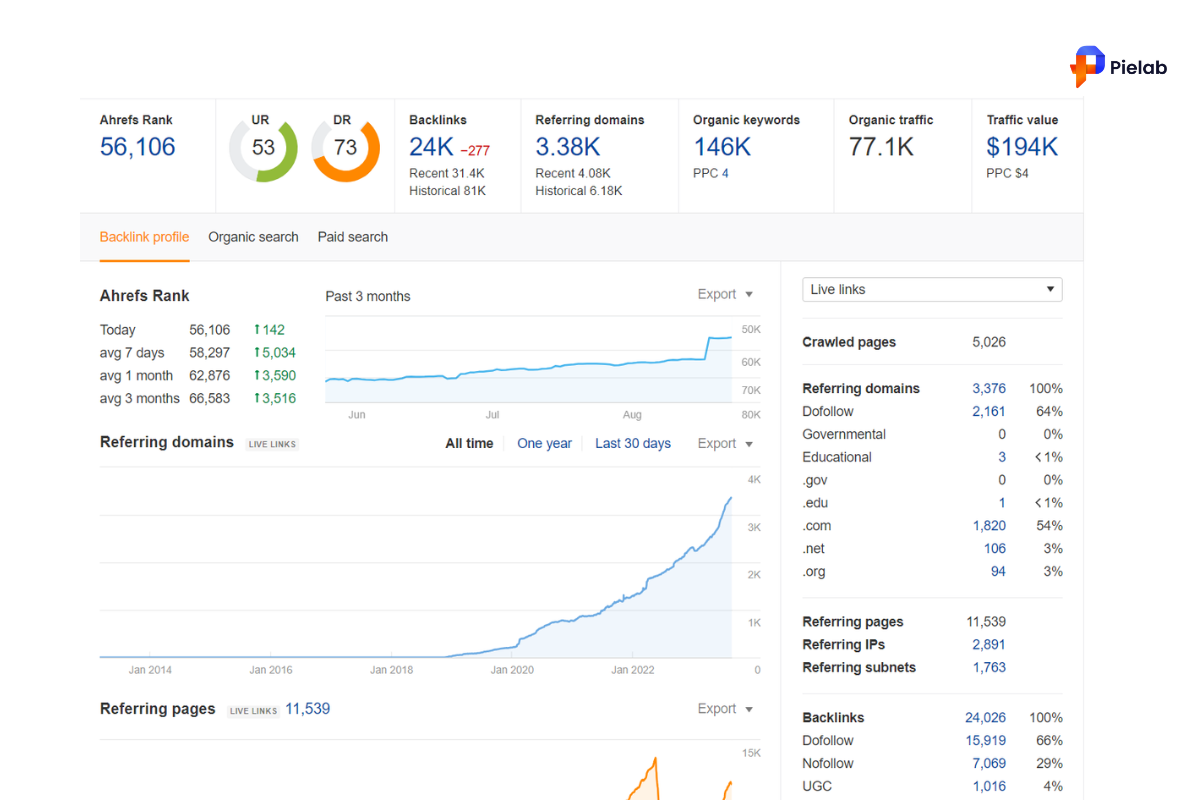
Tools like Ahrefs, Semrush, and Moz provide detailed reports showing whether each link is dofollow, the domain authority of each referring backlinks website, and which pages on your store receive the most link equity. These are paid tools but give the most complete picture of your profile.
Set up Google Alerts as an early detection system. Google Alerts sends you an email every time your store name appears on a new indexed page. When an alert arrives, visit the page and check whether it includes a proper dofollow backlink. If it only mentions your store without a link, reach out to the site owner and request one. Many will accommodate the request.
5 Proven Ways to Build Dofollow Backlinks for Your Shopify Store
Building a strong backlink profile takes time and genuine effort. These five methods are the most reliable approaches for Shopify merchants who want links that improve rankings without risking penalties.
Method 1: Publish Content That Other Sites Want to Link To
The most sustainable source of dofollow backlinks is content that backlink websites find genuinely useful and want to reference. For Shopify merchants, this means creating content that serves your product niche beyond just selling.
A skincare store that publishes a detailed ingredient safety guide gives beauty bloggers a reason to link to it. A running gear store that publishes original training plans gives fitness publications a citable resource. Without content worth linking to, outreach becomes much harder. Building your blog and resource pages first gives you something concrete to offer.
Content types that attract links:
Method 2: Reach Out to Industry Publications and Bloggers
Proactive outreach to backlinks websites in your product niche is one of the most direct ways to earn links. The key is personalizing every approach and offering genuine value rather than just asking for a link.
Steps:
- Identify backlinks websites in your niche that publish content related to your products.
- Read their recent content and find where a link to your store or blog post would genuinely add value.
- Send a short, personalized email explaining why your content would be a useful addition to their existing article.
- Follow up once if you do not hear back within one week.
- The conversion rate on outreach is low, but the links earned through this method are typically high-quality editorial placements that carry significant link juice.
Method 3: Reclaim Unlinked Brand Mentions
Some backlinks websites will mention your Shopify store by name without linking to it. These unlinked mentions are missed opportunities that require very little effort to convert into real dofollow backlinks.
Set up Google Alerts for your store name and your main product names. When an alert identifies a new mention without a link, reach out to the site owner and request that the mention be turned into one. The success rate is higher than cold outreach because the writer already knows your store.
Time to complete: 15 to 30 minutes per discovered mention.
Method 4: Build Relationships With Complementary Stores and Suppliers
Partnerships with non-competing stores that serve the same audience are a natural source of quality links. A running shoe store and a sports nutrition brand share an audience without competing directly. Co-creating content or being featured in each other’s blog posts can generate mutual links that benefit both stores.
Suppliers and manufacturers are another underused source of dofollow backlinks. Many brands maintain a “where to buy” or “authorized retailers” page. If you stock their products, request to be listed with a link to your store.
Method 5: Create Link-Worthy Resources and Tools
Original data, templates, calculators, and resource lists attract dofollow backlinks because they give other backlinks websites something specific and useful to reference. These assets take more effort to create than standard blog content, but they generate links consistently over time without ongoing outreach because writers discover them through search and link to them naturally.
SearchPie Features That Support Your Backlinks Strategy
Building dofollow backlinks and optimizing your on-page SEO work best when done together. A link from a high-authority backlinks website sends Google a trust signal, but what Google finds when it follows that link to your store determines whether the trust signal translates into a ranking improvement.
SearchPie supports your dofollow backlinks strategy by ensuring the pages receiving those links are as strong as possible.
Blog SEO Checklist for link-worthy content. SearchPie’s Blog SEO Checklist guides you through every optimization step as you write the content that earns dofollow backlinks. It checks keyword placement in headings, meta tag completion, image alt text, and internal link structure in real time. Well-optimized content ranks for its target keyword and attracts organic links from backlinks websites that discover it through search.
SearchPie also includes a backlink building feature that lets you share newly published content directly to Shopify community pages to start building an early link profile for new posts. This is one of the fastest ways to get initial links before organic discovery begins.
Keyword Explorer for identifying link-worthy topics. SearchPie’s Keyword Explorer helps you find the specific topics your target audience searches for, which is the foundation for creating content that earns dofollow backlinks. Content built around terms with genuine search volume gives backlinks websites a reason to link because it genuinely serves their readers.
Best for: Shopify merchants who want a dofollow backlink strategy supported by strong on-page content, optimized meta tags, and fast-loading pages that maximize the ranking value of every link earned.
Ready to make your content strong enough to earn and benefit from dofollow backlinks?
SearchPie’s Blog SEO Checklist, Keyword Explorer, and page speed optimization ensure every page on your Shopify store is ready to turn link authority into higher rankings and more organic traffic.
FAQS
Dofollow backlinks are links that pass authority and ranking signals from one website to another, helping improve search engine visibility.
You can find dofollow backlinks using SEO tools like Ahrefs, Semrush, or Google Search Console to analyze your backlink profile.
Earn dofollow backlinks by creating valuable content, guest posting, building partnerships, and gaining mentions from authoritative websites.
You can create dofollow backlinks through guest articles, business profiles, niche directories, resource pages, and other websites that allow standard outbound links.
Dofollow backlinks help search engines evaluate your site’s authority, which can improve rankings, organic traffic, and overall search visibility.