


Domain Rating vs Domain Authority are two popular SEO metrics used to evaluate a website’s authority. The key difference is their focus: DR measures backlink strength, while DA predicts ranking ability using multiple SEO factors. Neither metric is a direct Google ranking factor, but both are useful for guiding SEO strategy.
In this article, we’ll break down the key differences between Domain Rating and Domain Authority, explain how each is calculated, and guide you on how to use them effectively in your SEO strategy.
Here is a quick comparison between Domain Rating (DR) and Domain Authority (DA):
Summary:
- Domain Rating (DR) measures the strength of a website’s backlink profile.
- Domain Authority (DA) estimates how likely a site is to rank in search results.
- Neither metric is used directly by Google as a ranking factor.
- Use DR to evaluate backlink opportunities and DA to compare competitors.
- In 2026, SEO success depends more on content quality, EEAT, and relevance than on DR or DA alone.
What Are The Key Differences of Domain Rating vs Domain Authority?
Domain Rating (DR) by Ahrefs and Domain Authority (DA) by Moz both measure backlink strength, but use different algorithms. DR focuses on link quantity and quality, while DA predicts ranking ability using multiple signals. Neither directly affects Google rankings, but both help evaluate SEO performance.
Based on everything we’ve covered, the main differences between Domain Rating (DR) and Domain Authority (DA) can be outlined as follows:
- Domain Rating focuses specifically on the strength and scale of a site’s backlink profile, while Domain Authority aims to estimate how likely a site is to rank higher in search engine results.
- DR is calculated by evaluating the quantity and quality of backlinks, whereas DA factors in a wider range of SEO signals, such as referring domains, organic traffic trends, and even social engagement.
- DR is particularly useful when you’re planning link-building strategies, while DA is better suited for competitive analysis and understanding how your domain stacks up against others.
- DA is a relative metric, showing how your site compares to others, while DR operates more like an absolute indicator of backlink strength.
Let’s now dive into the technical details to compare Domain Rating vs Domain Authority.
What Is Domain Rating (DR)?
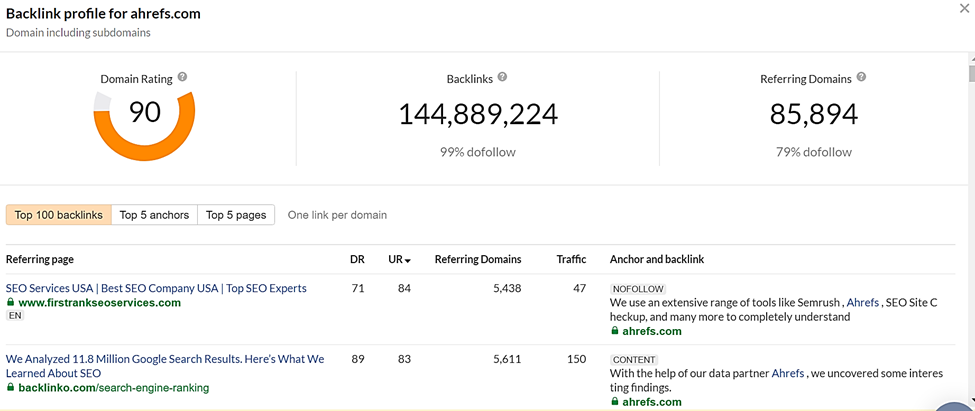
Domain Rating is a metric developed by Ahrefs that scores a website’s backlink profile on a scale from 0 to 100. The higher your DR, the stronger your backlink profile is believed to be.
How Is DR calculated?
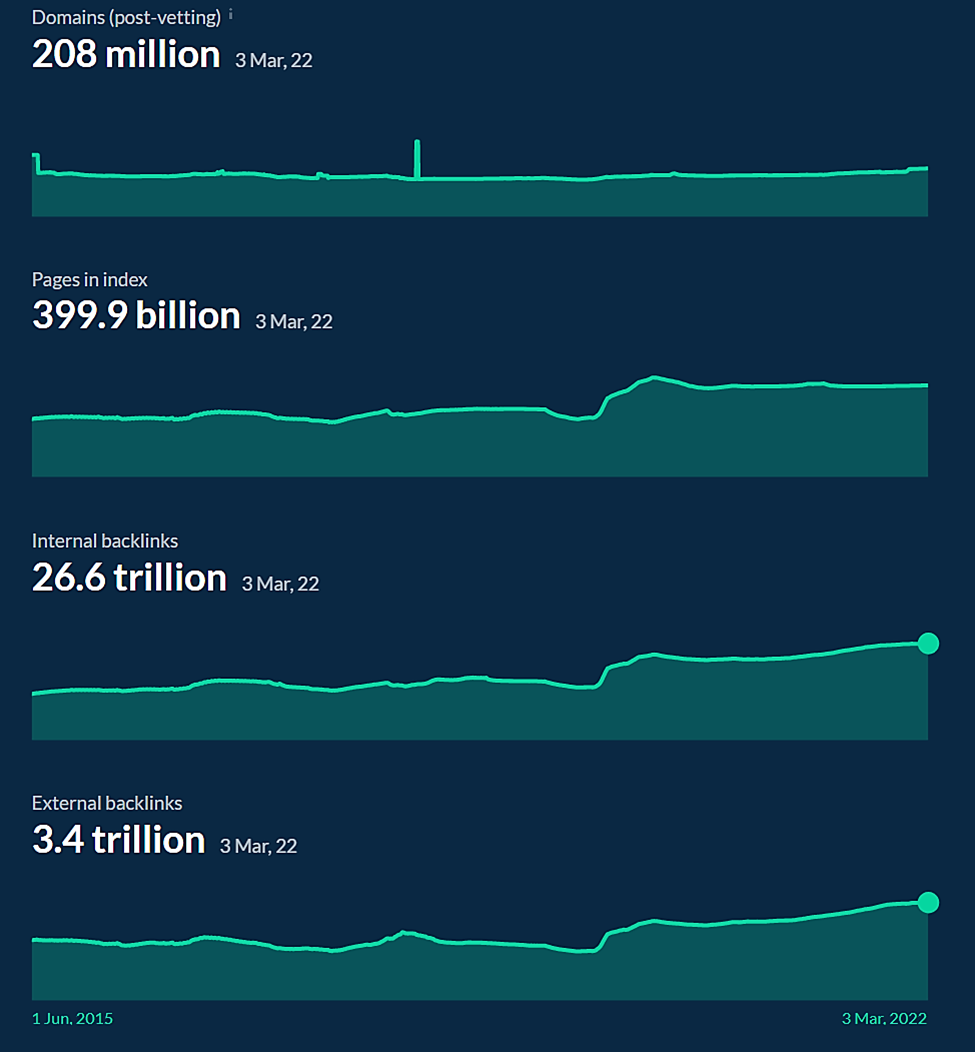
Ahrefs, the company behind Domain Rating (DR), runs one of the most powerful backlink crawlers online—second only to Google itself. Its database is massive, with over 30 trillion known links and more than 200 million unique domains. Ahrefs crawls around 5.76 billion pages each day and updates its index every 15 minutes, ensuring fresh, reliable data for SEO analysis.
When you check a website’s DR, Ahrefs calculates it using several key factors:
- The number of unique websites linking to your domain
- The total number of backlinks
- The DR (quality) of those linking websites
- How many other domains those linking websites also refer to
It’s important to note that quality outweighs quantity. A few strong backlinks from authoritative sites will increase your DR more than hundreds of low-quality ones. Scores range from 1 to 100 on a logarithmic scale, so moving from 30 to 60 is much harder than from 10 to 20. In general, websites with a DR above 60 are considered strong in terms of backlink authority.
With this advanced system, Ahrefs gives a realistic snapshot of how powerful your website’s backlink profile is.
What Is Domain Authority (DA)?
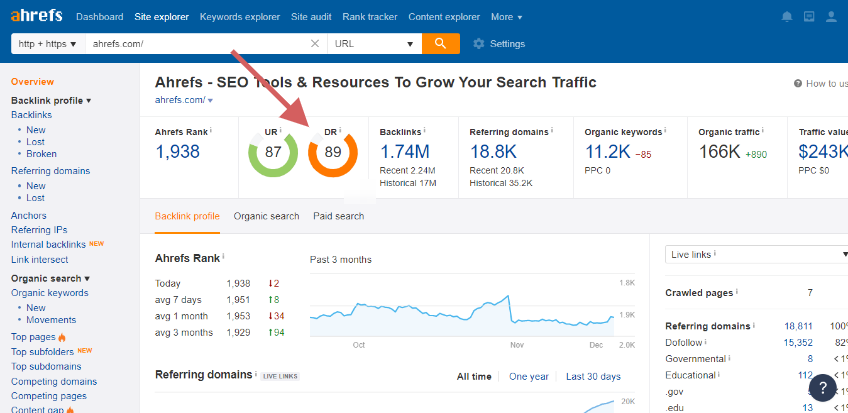
Domain Authority is a metric created by Moz, designed to predict a domain’s ability to rank in search engine results. It uses machine learning and various SEO factors, especially backlinks, to calculate a score between 1 and 100.
How Is DA calculated?
Moz determines Domain Authority (DA) using its proprietary machine learning algorithm, which evaluates a wide range of SEO signals collected from across the web. The latest version, Domain Authority 2.0, draws from a live index of over 43.8 trillion links, spanning 8 trillion pages and 743 million domains (source).
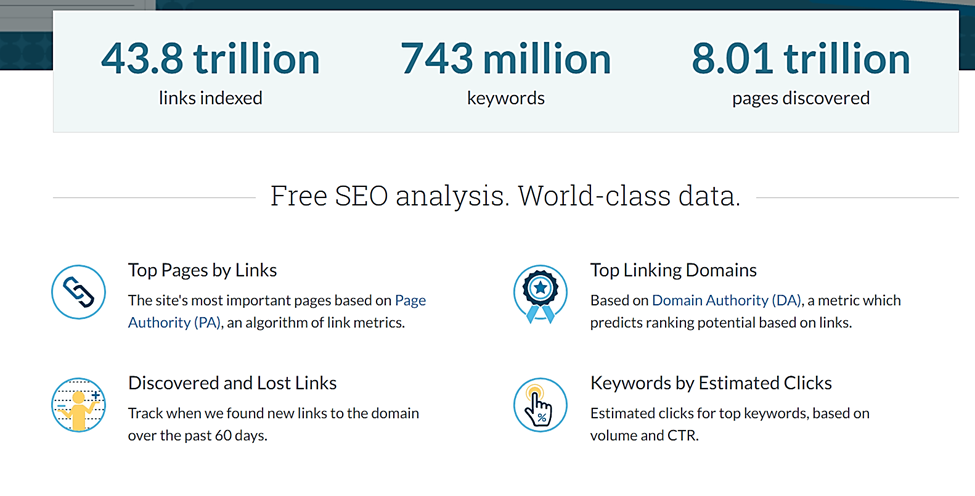
To calculate your DA score, Moz considers around 40 SEO factors—many of which are strong indicators of how well your domain might rank in Google’s SERPs. These include metrics like the number and quality of backlinks, linking root domains, website traffic, spam score, domain age, and more.
For instance, dofollow backlinks from trusted websites pass significant link equity, helping your domain gain authority faster. On the flip side, having too many low-quality or irrelevant links can negatively affect your score.
Moz’s system also reflects the evolving landscape of SEO. For example, strategies like semantic keyword clustering—grouping related keyword topics for more intelligent content targeting—can indirectly contribute to a higher DA by improving relevance and topical authority. Similarly, SEO automation tools can help maintain consistency in technical optimization, link monitoring, and content updates, all of which contribute to a more competitive domain profile.
It’s important to remember that Domain Authority is a relative score. Even if your metrics remain stable, your DA could decline if your competitors outperform you. For example, if your site scores 75 but others in your niche improve their backlink profile or expand their content using newer techniques, your score might fall despite no actual drop in quality.
In summary, DA is best used as a benchmarking tool—a way to assess where you stand against others in your industry. But boosting your actual search visibility requires a well-rounded strategy that combines quality content, link building, keyword optimization, and regular technical audits.
Which Metric Impacts Your SEO More: Domain Rating vs Authority?
When comparing Domain Rating vs Domain Authority in 2026, the key question is not which metric is better, but how each should be used. Google does not rely on DR or DA directly. Instead, it prioritizes content quality, relevance, and EEAT signals.
So, while they don’t influence rankings directly, they help guide smarter SEO decisions and prioritize efforts effectively.
When to Focus on Domain Rating (DR)
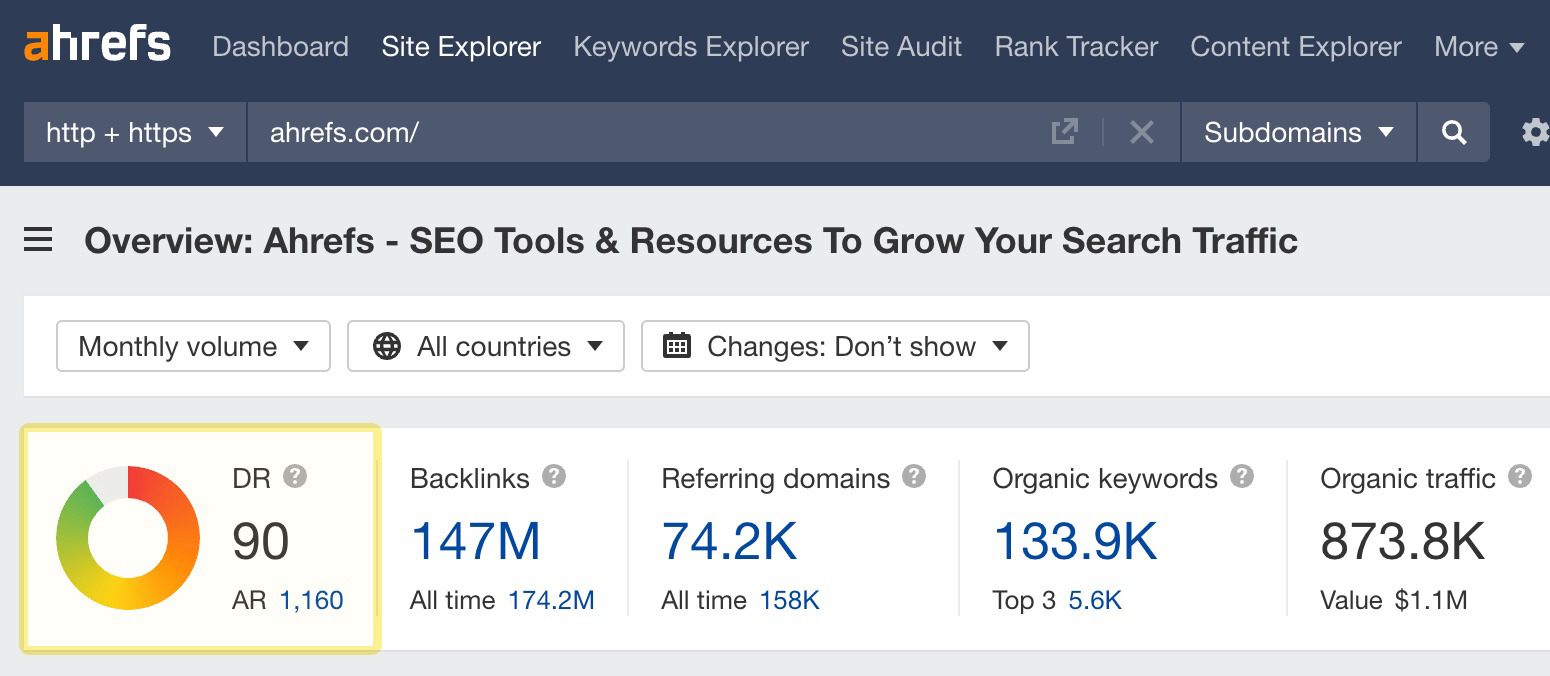
If you’re running a backlink-building campaign, Domain Rating offers a sharper lens. Since DR is calculated primarily from the quantity and quality of linking domains, it’s great for:
- Auditing your backlink profile to evaluate growth or gaps.
- Assessing link equity: Use DR to estimate the SEO value of inbound links.
- Filtering outreach targets: Focus on domains with high DR to gain better link juice.
When Domain Authority (DA) is More Useful
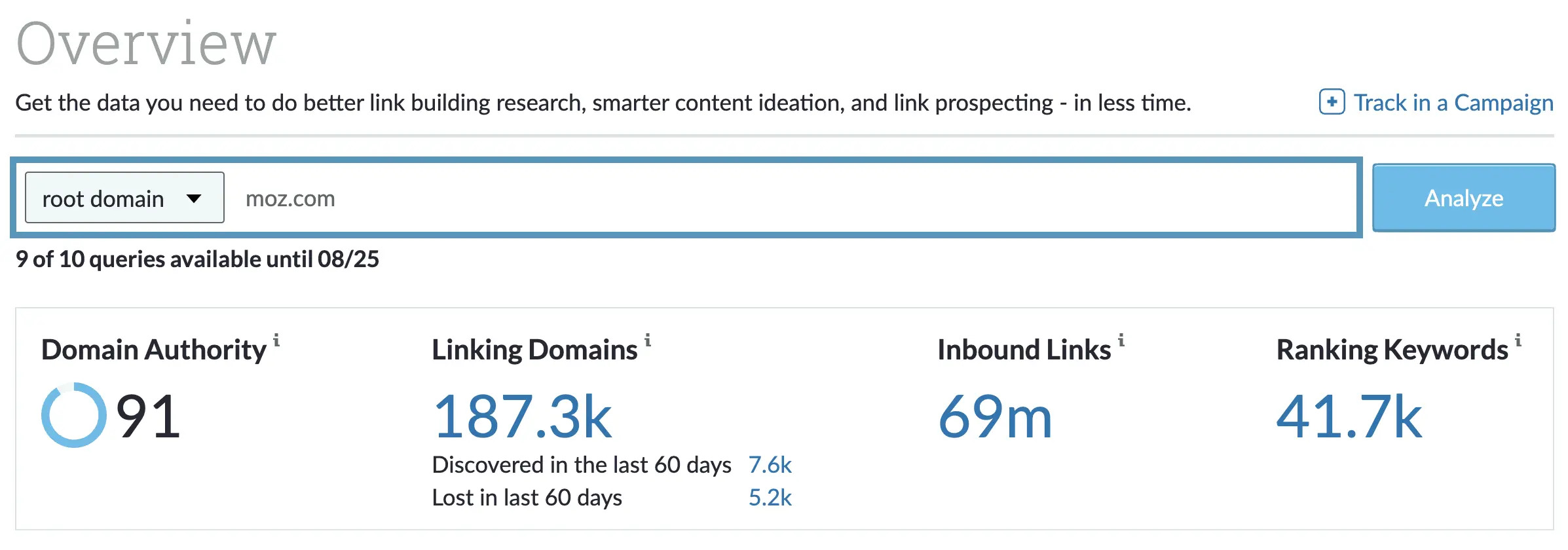
DA, on the other hand, offers a broader measure of domain strength. It considers over 40 factors, including root linking domains, spam score, traffic estimates, and more.
Use DA when you want to:
- Evaluate your domain’s overall SEO competitiveness.
- Report progress to stakeholders using an easy-to-understand score.
- Benchmark competitors based on relative SEO strength.
So, Which Metric Should You Rely On?
There’s no one-size-fits-all answer in the domain rating vs domain authority debate—it really depends on your goals.
- Need to boost your backlink profile? Focus on DR.
- Want to gauge your domain’s holistic SEO health? Use DA.
- Want the most insight? Use both— Domain Rating vs Domain Authority complement each other and offer a fuller picture.
In practical SEO, the best strategy is to leverage both as part of a balanced approach.
SEO Metrics That Matter in 2026: Domain Rating vs Authority?
While Domain Rating vs Domain Authority are useful for evaluating a website’s authority, they are not enough to drive real SEO success in 2026. Search engines have evolved to prioritize content quality, relevance, and user experience over third-party metrics.
To build a strong and sustainable SEO strategy, you should focus on the following metrics:
1. Organic traffic growth
Organic traffic reflects how your website performs in real search results. Instead of chasing scores like DR or DA, tracking traffic growth gives you a clearer picture of whether your SEO efforts are actually working.
2. Content quality and EEAT
Google increasingly prioritizes content that demonstrates Experience, Expertise, Authoritativeness, and Trustworthiness (EEAT). High-quality, well-researched, and user-focused content has a much greater impact on rankings than authority metrics alone.
3. Topical authority
Rather than targeting isolated keywords, successful websites build topical authority by covering a subject in depth. This helps search engines understand your expertise and improves your chances of ranking across multiple related queries.
4. Internal linking structure
A well-structured internal linking system helps distribute authority across your site and makes it easier for search engines to crawl and understand your content. It also improves user navigation and engagement.
5. User engagement signals
Metrics such as time on page, bounce rate, and user interaction indicate how valuable your content is to visitors. Strong engagement signals often correlate with better rankings over time.
Final Thoughts
In practice, Domain Rating vs Domain Authority should be treated as supporting metrics, not primary KPIs. While they can help guide link-building and competitor analysis, long-term SEO success depends on creating valuable content, improving user experience, and building real authority in your niche.
But beyond any metric, it’s quality content, technical SEO, and user experience that drive real, lasting rankings.
So use Domain Rating vs Domain Authority as your guides, but keep your eyes on the real goals: Visibility, Relevance, and Engagement.
FAQs
Neither is “more accurate” as they measure different things. DR is the best indicator of a website’s pure backlink strength, while DA is a broader predictive score of how well a site might rank. For link building, DR is often preferred; for competitive benchmarking, DA is widely used.
DA is a relative metric. Since Moz uses a 100-point logarithmic scale, your score can drop if high-authority sites (like Facebook or Google) gain even more authority, or if your competitors significantly improve their SEO profiles, shifting the entire scale.
No. While there is a strong correlation between high authority scores and high rankings, these are third-party metrics and not official Google ranking factors. You still need high-quality content, technical SEO, and positive user signals to rank well.
Most new stores start at DR 0. A “good” score depends on your niche. Generally, a DR between 20–40 is considered average, while 40–60 is strong. Instead of chasing a specific number, focus on having a higher score than your direct competitors.
There are no shortcuts. To increase these metrics sustainably, you must earn high-quality dofollow backlinks from reputable sites, create shareable content, and maintain a clean link profile free of spam. Since both scales are logarithmic, it becomes significantly harder to move up as your score increases.
A good Domain Rating depends on your niche and competitors. Generally, a DR between 20–40 is average, 40–60 is strong, and 60+ indicates a very authoritative website with a powerful backlink profile.
A good Domain Authority varies by industry. For most websites, DA 30–50 is considered moderate, while 50+ indicates a strong domain capable of competing for competitive search rankings.