
Recently, Shopify merchants started noticing something unexpected: access to certain customer data was suddenly restricted. Discussions quickly surfaced in the Shopify Community, raising questions about what changed in Shopify’s handling of Personally Identifiable Information (PII) and why. This article breaks down what PII really means in the Shopify ecosystem, what has changed, how merchants are responding, and what you can do to stay compliant and secure moving forward.
Summary:
- Section 1: We’ll begin by clarifying what Personally Identifiable Information (PII) means in the Shopify ecosystem, what counts as customer data, and why even indirect identifiers can fall under stricter privacy control.
- Section 2: You’ll understand how Shopify collects and manages customer PII, including plan differences, API permission scopes, and why access is increasingly treated as a regulated privilege.
- Section 3: We’ll break down what Shopify changed regarding PII access, how it impacted custom apps on lower-tier plans, and how merchants in the Shopify Community reacted and adapted.
- Section 4: Finally, we’ll explore practical compliance strategies, including rebuilding apps with OAuth, minimizing unnecessary PII access, and maintaining store performance while adjusting to new data governance rules.
Personally Identifiable Information: What To Know About Customer Data?
1. What is Personally Identifiable Information?
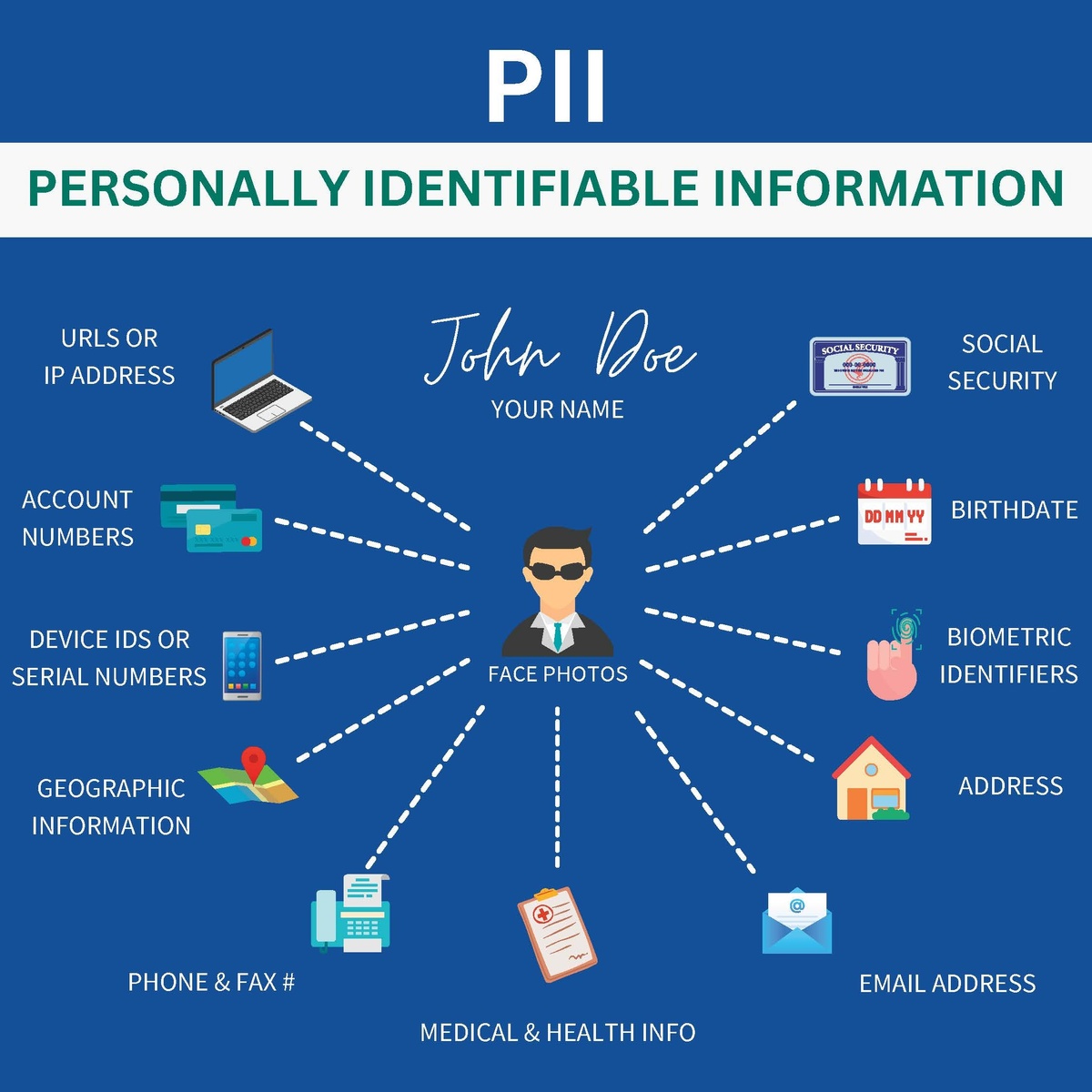
According to IBM, Personally Identifiable Information (PII) refers to any information that can be used to identify a specific individual, either on its own or when combined with other data. In other words, if a data point can help recognize, contact, or locate a person, it is likely considered PII.
So, what counts as PII?
The key factor is not just the data itself, but whether it can reasonably be linked back to a specific individual.
- PII: Data that directly or indirectly identifies a person. This can include names, emails, phone numbers, or even customer IDs when connected to an account.
- Non-PII: Data that cannot be used to identify a specific individual, especially when it is aggregated or anonymized.
For example:
- “John Smith, [email protected]” → PII
- “1,200 visitors from the US last week” → Non-PII
In a Shopify context, even seemingly harmless data such as a customer ID or order history can become PII if it can be traced back to a real person. The distinction matters because PII requires stricter handling, access control, and compliance considerations.
2. Types of Personally Identifiable Information
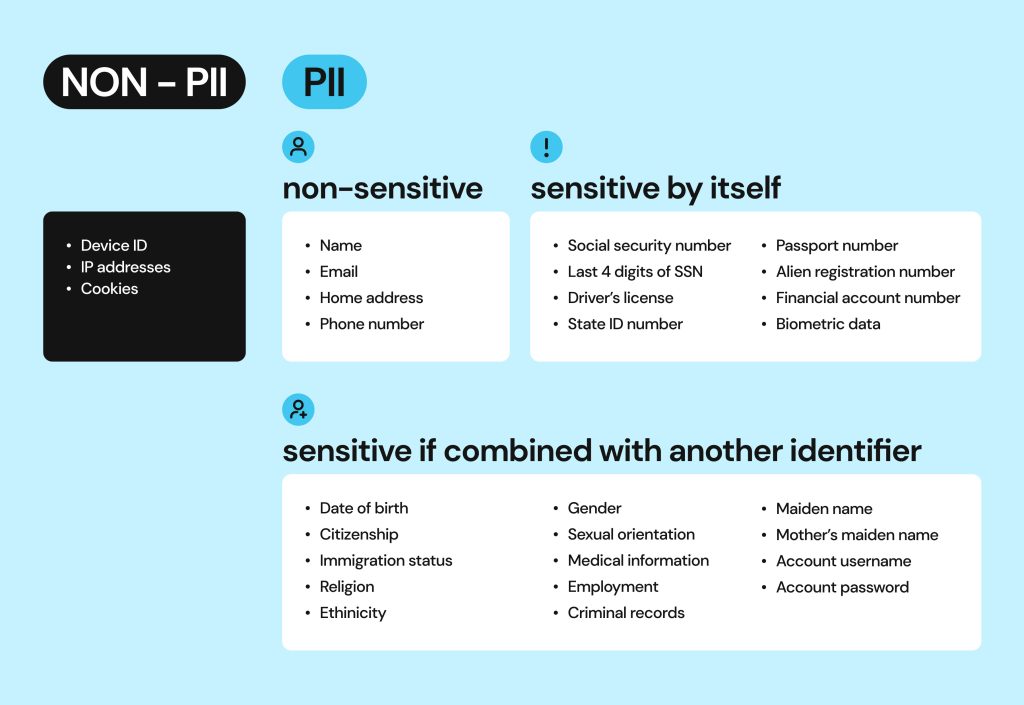
a. Direct Identifiers
Direct identifiers are pieces of information that can immediately identify a person without needing any additional data. On their own, these data points clearly point to a specific individual.
Common examples include:
- Full name
- Email address
- Phone number
- Physical address
- Government-issued ID (such as passport number or national ID)
In a Shopify store, customer profiles often contain several direct identifiers, especially during checkout, payment processing, and shipping. Because these fields clearly identify a customer, they require careful handling and controlled access.
b. Indirect Identifiers
Indirect identifiers cannot identify someone on their own, but they can do so when combined with other information. While they may seem harmless individually, they become sensitive when linked to a real person.
Examples include:
- IP address
- Device identifiers
- Order history connected to a customer account
- Customer IDs
For example, a customer ID by itself does not reveal who someone is. However, once it is connected to a name or email address, it becomes part of identifiable data.
In e-commerce, indirect identifiers are commonly used for analytics, personalization, fraud detection, and performance tracking. Even so, they fall under privacy considerations when they can reasonably be tied back to an individual.
c. Sensitive Personally Identifiable Information
Sensitive Personally Identifiable Information (PII) refers to highly confidential data that carries greater risk if exposed. Because misuse of this information can lead to financial loss or identity theft, it requires stronger security measures.
Examples include:
- Payment details (credit card numbers, bank account data)
- Financial records
- Authentication data (passwords, security tokens)
Sensitive PII is typically subject to stricter compliance standards and must be protected with encryption, limited internal access, and secure storage practices. For Shopify merchants, protecting sensitive PII is essential for maintaining customer trust.
Personally Identifiable Information: How Does Shopify Handle Customer Data?
1. What Customer Data Does Shopify Collect?
Shopify collects customer data to enable core store operations such as checkout, payment processing, shipping, and order management. The type of data collected depends on how a store is configured, but typically includes:
Customer Profiles
When customers create an account or place an order, Shopify may store information such as:
- Full name
- Email address
- Phone number
- Shipping and billing addresses
- Account activity
These details form the foundation of a customer record inside the Shopify admin.
Orders and Checkout Data
During checkout, Shopify processes additional information necessary to complete a transaction, including:
- Order history
- Purchased products
- Transaction timestamps
- Payment confirmation status
Although payment processing is handled securely and separately, transaction-related data remains linked to the customer profile.
Contact Information
Customer communication data, such as email addresses or phone numbers, may also be used for:
- Order confirmations
- Shipping updates
- Marketing emails (with consent)
- Customer support
This information qualifies as PII because it directly identifies or contacts a specific individual.
2. How Personally Identifiable Information Access Works on Shopify
Access to customer PII is not universal. Shopify controls how and where this data can be accessed depending on store plan, API type, and app permissions. Shopify stores customer PII as part of normal store operations, but API-level access is permission-based and increasingly restricted. While merchants can view customer information in the admin dashboard, API access depends on plan level, permission scopes, and approval requirements. Overall, Shopify’s approach reflects a shift toward tighter privacy protection, meaning merchants must treat customer data access as a controlled privilege, not an automatic right.
Personally Identifiable Information: What Did Shopify Change and How Did Merchants React?
1. Changes in Shopify Personally Identifiable Information
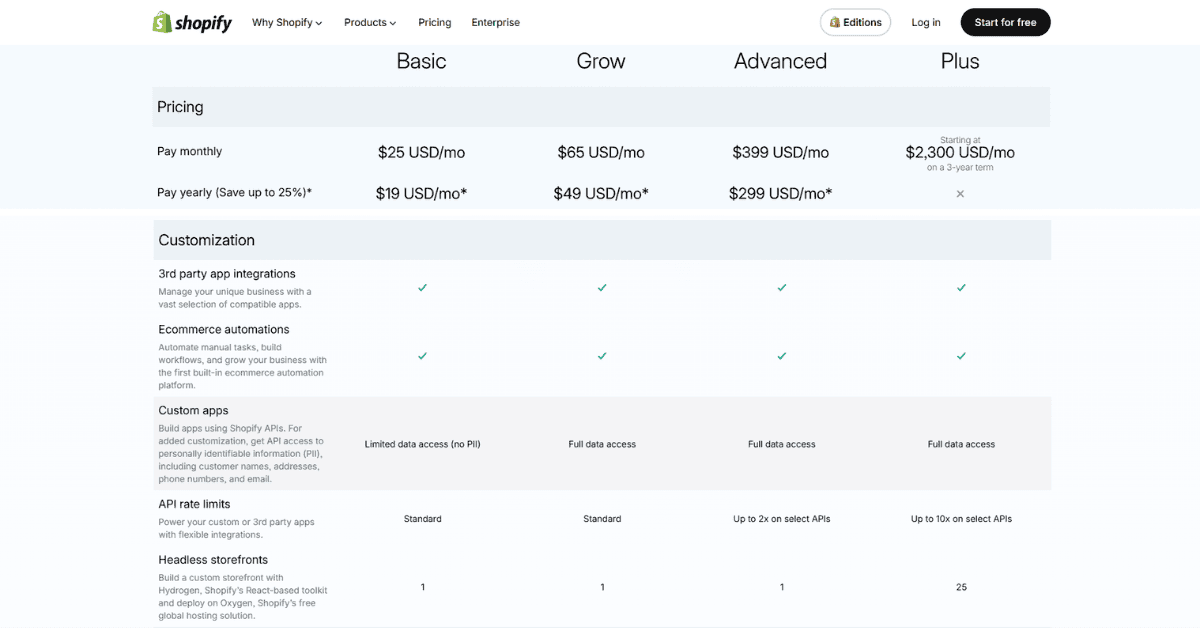
Shopify restricted access to customer Personally Identifiable Information for custom apps created directly inside stores on the Basic plan. After the change, fields such as customer name, email, and address were no longer returned through the Admin API unless merchants used approved app structures or upgraded their plan. The change reflects Shopify’s move toward stricter data governance, aligning API access with modern privacy compliance and platform security standards.
The immediate impact was operational disruption. Custom workflows tied to CRM systems, fulfillment tools, reporting dashboards, and marketing automation stopped functioning as expected. For many merchants, it affected daily business processes. What made the situation more challenging was the perception that the change happened with limited proactive communication, leaving store owners to discover the restriction only after integrations broke.
2. Shopify Merchants Disagreements and Frustration
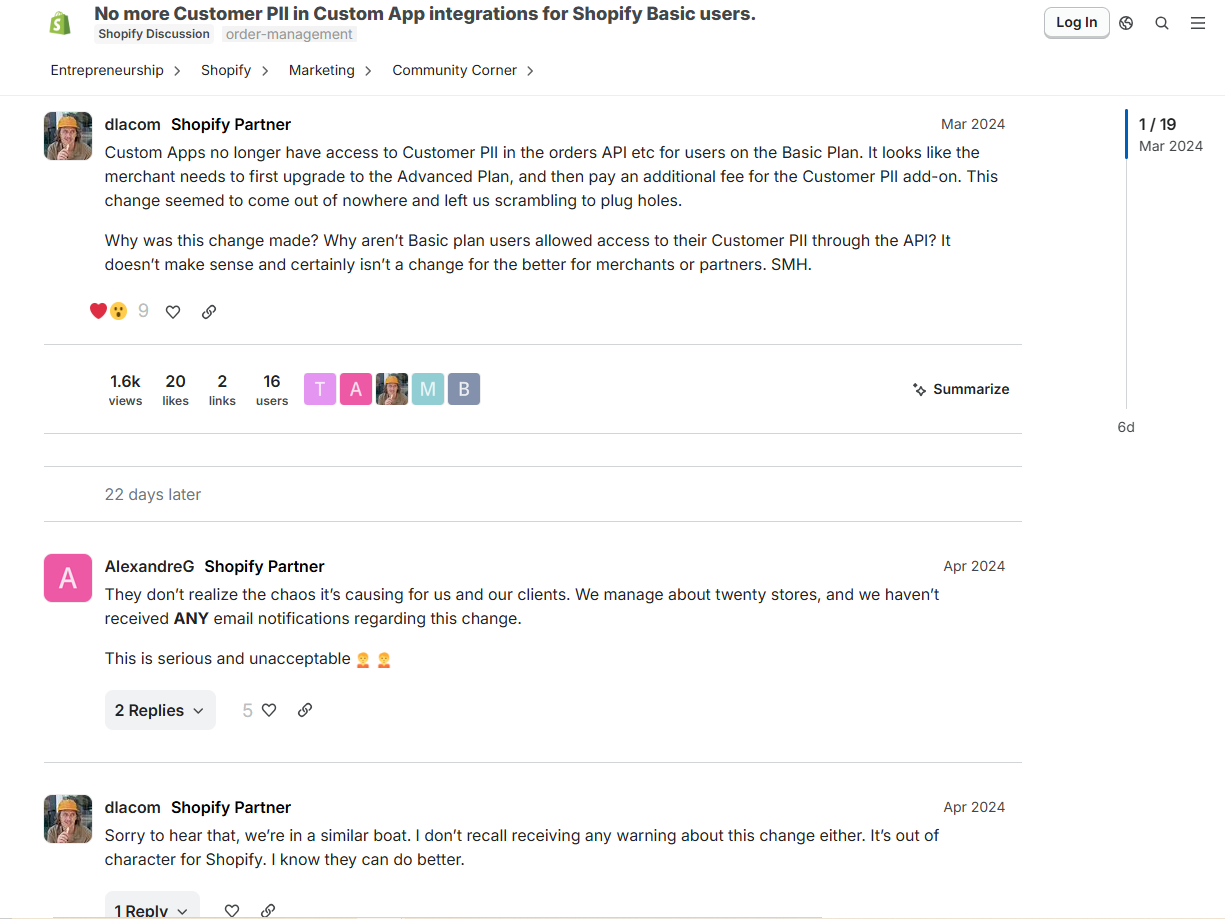
Community reactions reflected a mix of frustration and adaptation. Some merchants questioned the fairness of limiting Personally Identifiable Information access at the Basic plan level, especially when their workflows had depended on that access for years. Others began exploring alternatives, such as rebuilding their integrations through the Shopify Partner Dashboard, where OAuth-based apps still retained compliant access to protected customer data. A portion of merchants considered upgrading plans, while others migrated to public apps already reviewed and approved within Shopify’s ecosystem. However, moving to the Shopify Plus plan involves a significant investment that not every small business can justify solely for data access.
From a broader perspective, this change signals something important: access to customer data on Shopify is no longer static. It is increasingly treated as a controlled privilege tied to compliance standards and platform governance. Shopify’s direction aligns with global privacy trends, but it also forces merchants to rethink how deeply their operations rely on direct Personally Identifiable Information access.
The takeaway is not simply that “Shopify restricted data.” Customer data governance is evolving, and merchants who build workflows around flexible, compliant, and minimal data access models will be better positioned long term.
Personally Identifiable Information: How Can Merchants Stay Compliant and Secure?
Shopify’s update to Customer Personally Identifiable Information access represents a significant shift for many merchants. For stores that relied heavily on custom integrations, especially on lower-tier plans, the change disrupted established workflows almost overnight. It is understandable that some merchants may feel unprepared or even frustrated, particularly when existing systems stopped functioning as expected. Adjusting to new permission requirements and stricter data controls requires both technical effort and strategic reconsideration.
1. Rebuild Custom Apps via Shopify Partner Dashboard (OAuth-Based Apps)
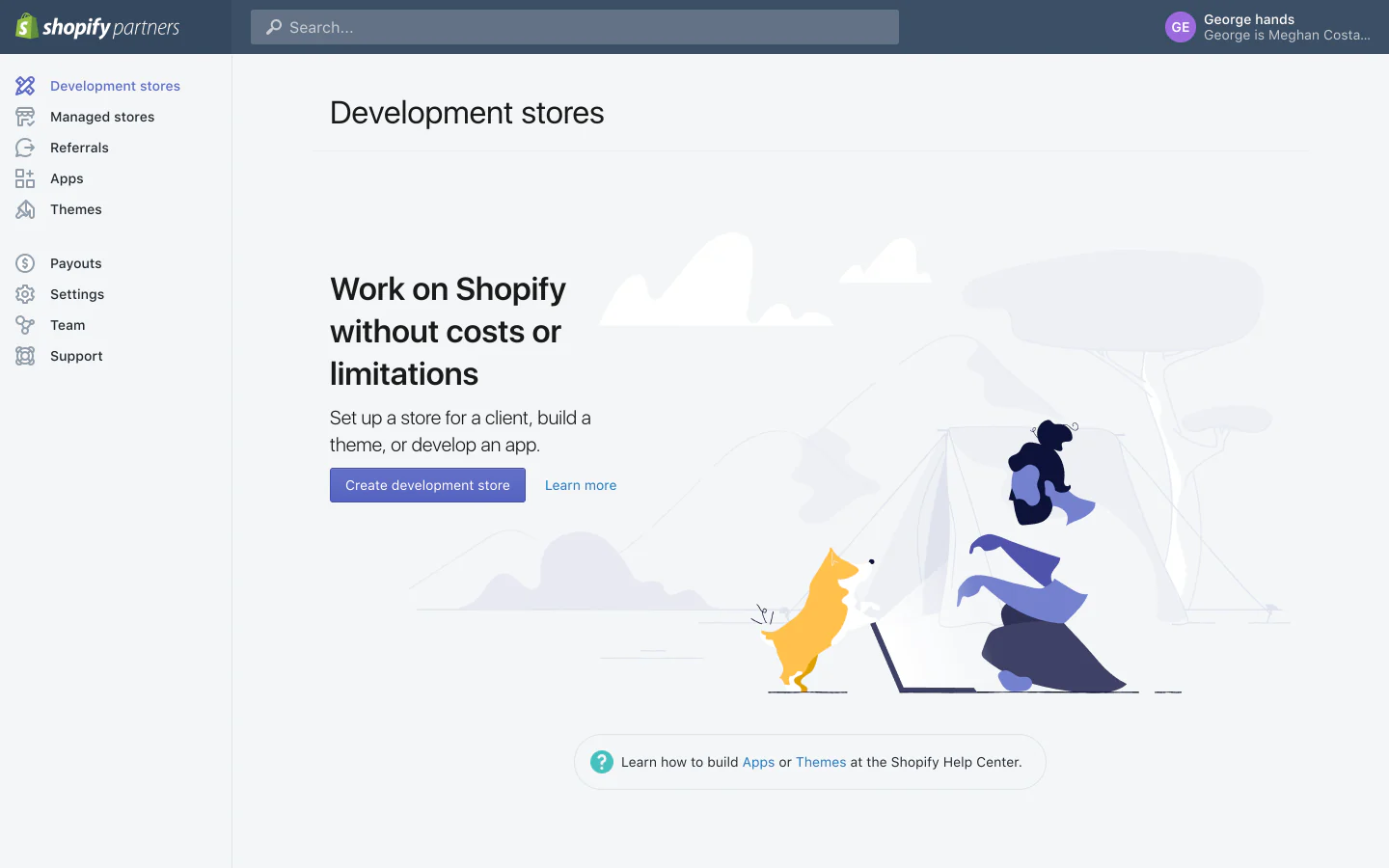
Instead of creating custom apps directly inside the store admin, many developers rebuilt them through the Shopify Partner Dashboard using proper OAuth authentication and approved permission scopes.
Pros
- Restores compliant access to protected customer data
- Aligns with Shopify’s official app architecture
- More stable long-term than admin-created custom apps
Cons
- Requires development effort and technical knowledge
- May need app review or scope justification
- Not ideal for non-technical merchants
2. Switch to Public or Shopify-Approved Apps
Some merchants migrated from private integrations to public apps already reviewed and compliant with Shopify’s data policies.
Pros
- Lower compliance risk
- Managed updates and maintenance by app provider
- Less technical responsibility for merchants
Cons
- Ongoing subscription costs
- Less customization compared to custom-built apps
- Dependency on third-party vendors
3. Minimize Direct PII Dependency
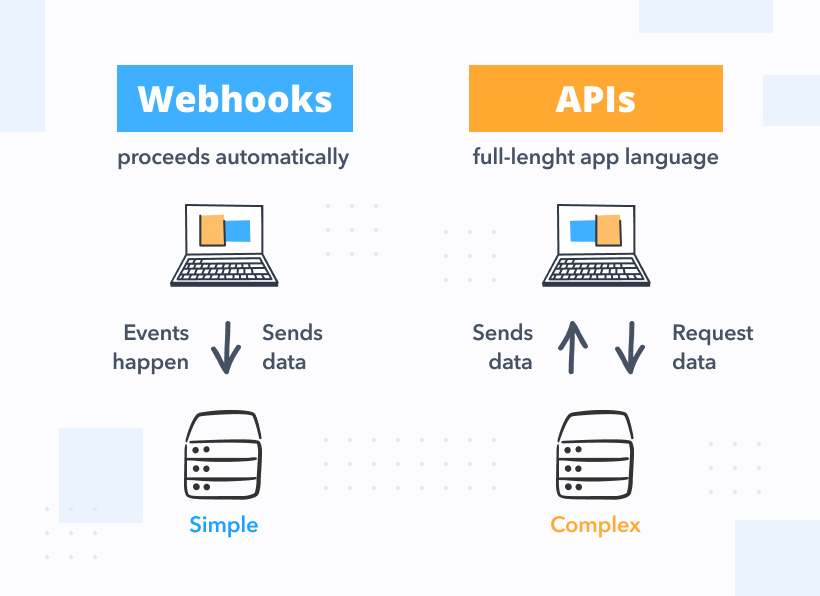
Several merchants redesigned workflows to reduce reliance on direct customer data access. This included using webhooks, anonymized IDs, or limiting data collection to essential fields.
Pros
- Lower risk of future policy disruption
- Improved data privacy posture
- More resilient system architecture
Cons
- May limit advanced personalization
- Requires rethinking existing workflows
- Initial restructuring effort needed
Extended Insights: Protecting Store Performance While Adapting to PII Changes
As merchants restructure their data workflows and app architecture, monitoring store performance and technical health becomes even more important. Changes in integrations, permission scopes, or API usage can unintentionally impact site speed, structured data, or overall stability, especially when custom apps are rebuilt or replaced.
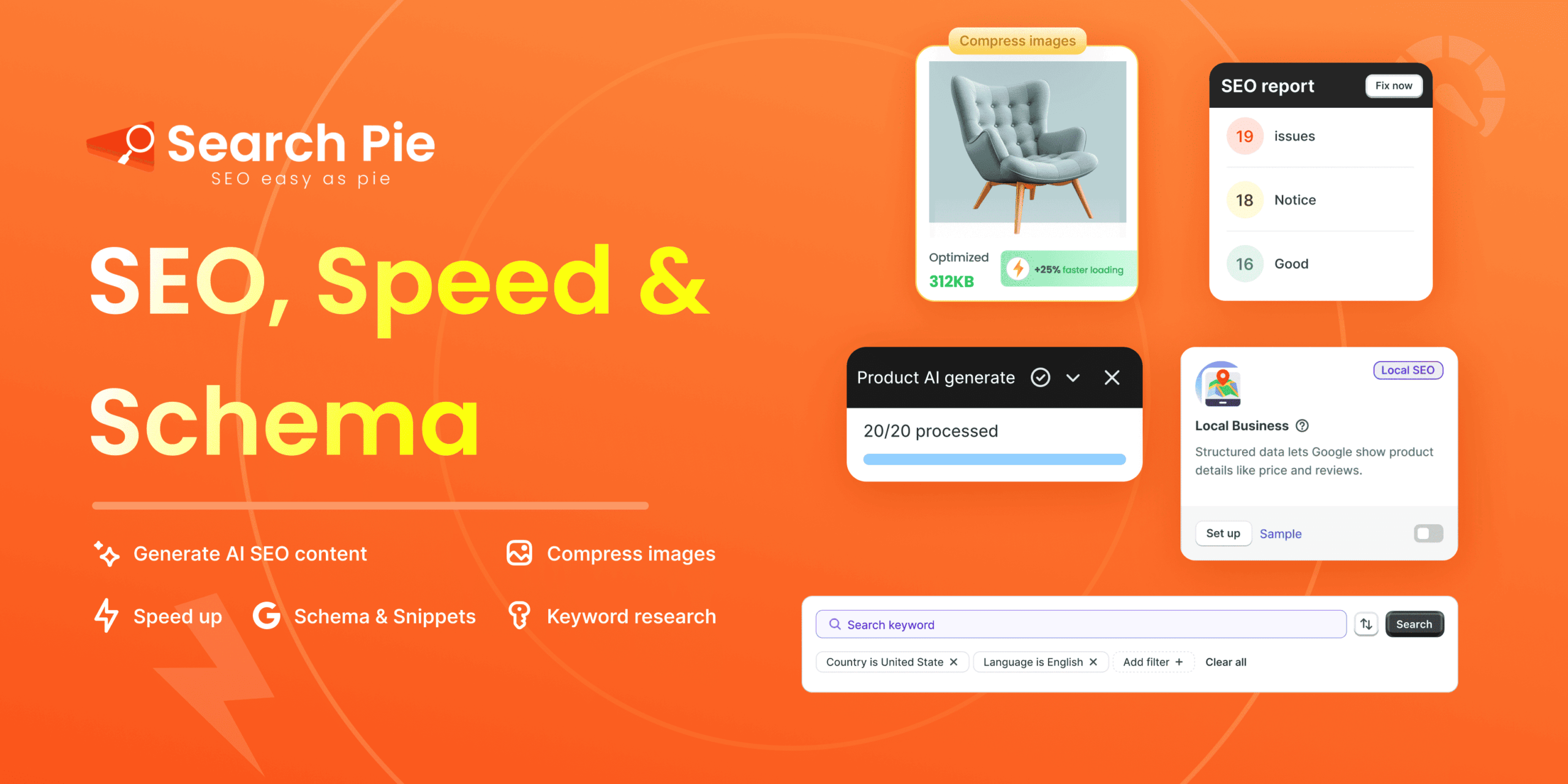
Compliance-driven adjustments should not create new performance risks. Without proper monitoring, these technical changes can quietly influence SEO rankings and user experience. Tools like SearchPie help merchants continuously monitor technical SEO, site speed, and structural issues, ensuring that necessary compliance updates do not negatively impact growth. By detecting broken links, performance bottlenecks, or metadata inconsistencies early, merchants can stay secure and compliant while keeping their store optimized and competitive.
Conclusion
Personally Identifiable Information is no longer just technical data, it is a strategic business responsibility. Shopify’s recent restrictions make it clear that customer data access is now a regulated privilege, not a default right. While the update disrupted many merchants, it signals a broader shift toward stronger privacy governance. Stores that proactively redesign their systems around minimal, compliant data access will be more resilient, secure, and better prepared for future platform changes.
FAQs
1. What qualifies as Personally Identifiable Information (PII) on Shopify?
PII includes any data that can directly or indirectly identify a customer, such as names, emails, phone numbers, shipping addresses, and customer IDs linked to accounts.
2. Why did Shopify restrict customer PII access for some stores?
Shopify tightened API access to align with stronger privacy regulations and platform security standards, especially for custom apps on lower-tier plans.
3. Can Shopify Basic stores still access customer PII?
Merchants can view customer data in the admin dashboard, but API access may be restricted depending on plan level and app permission scopes.
4. What is the safest way to maintain compliant PII access?
Using OAuth-based apps through the Shopify Partner Dashboard or approved public apps ensures access aligns with Shopify’s data governance policies.
5. How can merchants reduce risk when handling customer data?
Merchants should follow the principle of least privilege, limit unnecessary data collection, secure stored information, and regularly audit app permissions.