
In the digital era, AI search is no longer a demo: AI search has moved from pilots to everyday behavior, reshaping how people discover and decide. A recent McKinsey survey shows half of consumers now intentionally use AI-powered search tools when they research and buy. This guide walks through Answer Engine Optimization step by step, explaining how to structure concise, extractable answers, apply the right schema, and strengthen cite-worthy credibility so that AI systems are more likely to reference your site.
Summary:
- Section 1: Get a clear grasp of Answer Engine Optimization (AEO) with a simple definition, how AI “answer engines” lift and cite your content, and the step-by-step flow.
- Section 2: See how Answer Engine Optimization (AEO) vs. Search Engine Optimization (SEO) differ in outcomes: discovery channel (in-answer vs. SERP), primary KPIs (citation rate vs. rankings/CTR), click yield (one-tap vs. position-dependent), and where each drives conversions.
- Section 3: Understand why Answer Engine Optimization (AEO) matters for online stores now: show up at the decision moment, turn zero-click summaries into one-tap visits, win high-intent comparisons, and build trust that lifts add-to-cart and revenue.
- Section 4: Put Answer Engine Optimization (AEO) to work with 5 practical moves: launch answer then test across engines and track citation rate. SearchPie can help standardize on-page checks, schema, and internal links to accelerate results.
1. What Is Answer Engine Optimization (AEO)?
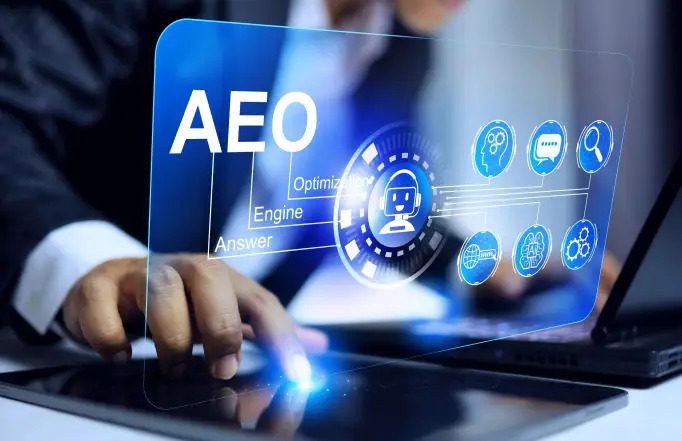
Answer Engine Optimization (AEO) is the practice of shaping a page so AI “answer engines” (Google AI Overviews, Perplexity, Microsoft Copilot, ChatGPT) can lift a clear answer from it and cite your site. Rather than only chasing rankings and clicks, AEO makes your content easy to extract, verify, and attribute inside AI-generated responses. This matters because showing up inside AI answers makes clicking through almost effortless: users see your brand next to the summary and tap the cited link or card without scanning a long results page. Answer Engine Optimization turns AI visibility into visits, not just mentions, and it complements your traditional rankings. AEO turns answer visibility into one-tap visits and assisted conversions, especially on buying guides and PDPs. Essentially, it forces you to structure your website content in a way that machines can easily understand and serve.
The flow of answer engine optimization will start at:
- Match the question: State the user’s question in a heading, then open with a 50–80 word, self-contained answer.
- Make extraction easy: Use short sentences, bullets, steps, and clear definitions so models can copy a clean snippet without guessing.
- Show evidence: Place sources next to important claims, link to primary references, and keep facts consistent across your site.
- Add structure: Mark up pages with the right schema (Article, FAQPage, HowTo) so machines understand sections, entities, and steps.
- Prove authority by strengthening E-E-A-T: add bylines and credentials, show “Last updated,” and connect related pages with relevant internal links.
- Pass technical checks: Keep titles, headings, and metadata clean; fix duplication; ensure crawlability; and maintain fast, stable pages.
- Get selected and cited: For a given query, the engine scores candidate pages for clarity, freshness, and trust, then quotes your answer block and shows your URL.
- Learn and iterate: Test real queries across engines, track where you appear or get cited, refresh sensitive facts, and fill content gaps to raise your citation rate over time.
2. What Are The Differences Answer Engine Optimization (AEO) VS. Search Engine Optimization (SEO)?
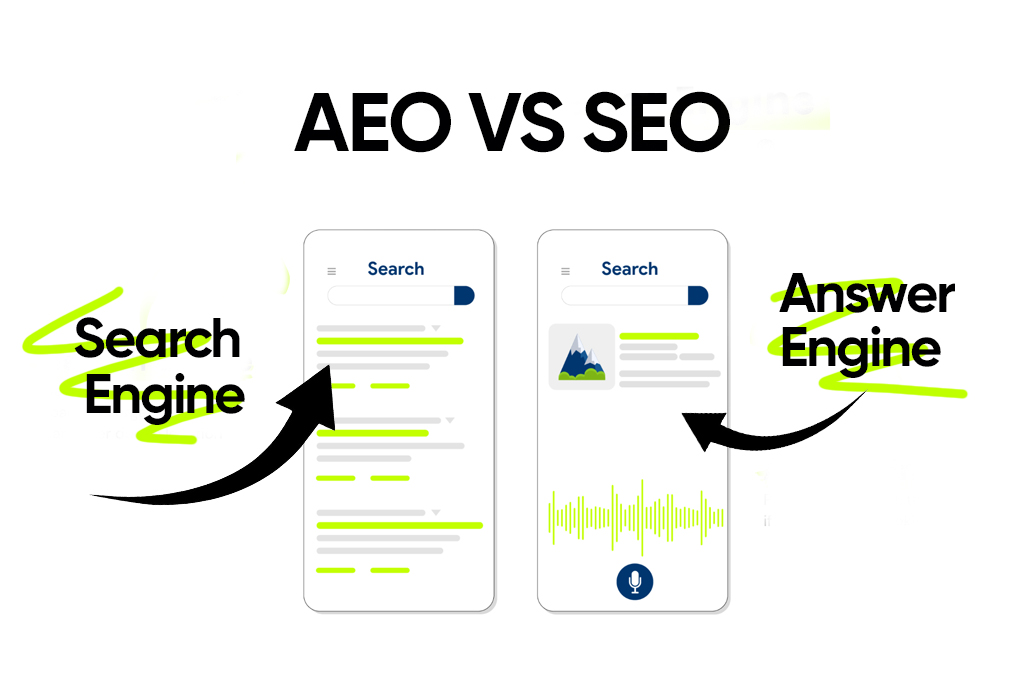
AEO targets citations inside AI answers and “one-tap” visits (measured by appearance/citation rate and AI-referred sessions), while SEO targets rankings and clicks on classic SERPs (measured by impressions, CTR, and position). In practice, AEO is strongest for focused Q&A and zero-click moments, whereas SEO excels at steady, long-term demand capture.
Key similarities:
- Aims to give users clear, trustworthy answers fast.
- Needs quality content with clean formatting (headings, bullets, short paragraphs).
- Depends on solid tech basics: fast load, crawlable pages, mobile-friendly, clear metadata.
- Internal links matter for guiding users and bots to related content.
- Credibility signals (author, sources, “Last updated”) help both.
- Ongoing measurement and iteration improves results over time.
Key differences:
3. Why Is Answer Engine Optimization (AEO) Important?
- Show up where shoppers ask: Customers now ask AI tools for quick advice like what to buy, which brand to trust, how to use a product. If your page is “answer-ready,” the AI can cite you in that on-screen answer. Your brand sits in front of the shopper at the exact decision moment.
- Turn zero-click into one-tap traffic: Many users read the AI summary and avoid scrolling. AEO helps your product page or guide appear inside that summary with a visible cite or card. One tap takes them to your store, so you gain visits even when classic CTR is dropping.
- Win high-intent comparisons: Buyers ask AI: “best running shoes for flat feet,” “how to size a bike helmet,” “which toner for sensitive skin.” Answer Engine Optimization (AEO) pushes clear, sourced answers (plus your product/category links) into those comparisons, sending qualified visitors to the right page.
- Build trust that converts: AI systems prefer sources with evidence, dates, and expertise. When you add short answer blocks, cite reliable references, and keep pages fresh, you signal quality. That trust carries over to shoppers, lifting add-to-cart and reducing bounce.
- Beat bigger competitors with speed: You do not need to outspend them on every keyword. You need fast, accurate answers for specific questions. AEO lets smaller brands win visibility on long-tail and “how-to” queries where purchase intent is real.
- Measure what matters: Track appearance/citation rate in AI answers, AI-referred traffic, and assisted conversions alongside rankings, CTR, and revenue. If citations rise on key queries, your product and guide pages are doing their job.
- Keep quality high, stay current: AI answers change as models and policies evolve, especially on sensitive topics (health, pricing, specs). Mark pages with “Last updated,” refresh facts, and link to primary sources so engines can rely on you.
4. How To Get More Traffic From AI With Answer Engine Optimization (AEO)?
Tip #1: Lead with an “Answer-First” block (50-80 words)

AI engines favor concise, self-contained answers that can be lifted with minimal editing. Placing a short, plain-English answer at the top of each section reduces ambiguity, helps models map your page to the user’s question, and increases the chance of a citation. For ecommerce, this also gets shoppers to key info faster (fit, use cases, care, compatibility).
How to implement:
- Start each major H2 with a 50-80 word paragraph that directly answers the question (“What is…”, “How to…”, “Which is best for…”).
- Follow with bullets/steps, then deeper detail (materials, sizing, comparisons).
- Add a one-line proof or stat with a source link right after the answer if you reference data.
- Example (category page guide): “Which running shoe is best for flat feet?” → 60-word answer → bullets on arch support, stability, return policy → link to the relevant product filter.
Tip #2: Use Q&A headings and scan-friendly formatting
LLMs and shoppers both scan. Clear questions, short paragraphs, bullets, and tables create predictable patterns that models can parse. This improves extractability for answer engine optimization and reduces the risk of the AI paraphrasing you inaccurately.
How to implement:
- Frame H2/H3 as real questions; add follow-up H3s that mirror “People Also Ask” phrasing.
- Limit paragraphs to 2–3 sentences; prefer bullets and numbered steps for instructions (care, assembly, sizing).
- Use comparison tables for look-alike products (specs, materials, warranty).
- Add a TL;DR box for long guides (e.g., “For sensitive skin, choose alcohol-free toner; see our top 3 below.”).
Tip #3: Build “cite-ability” with evidence and freshness
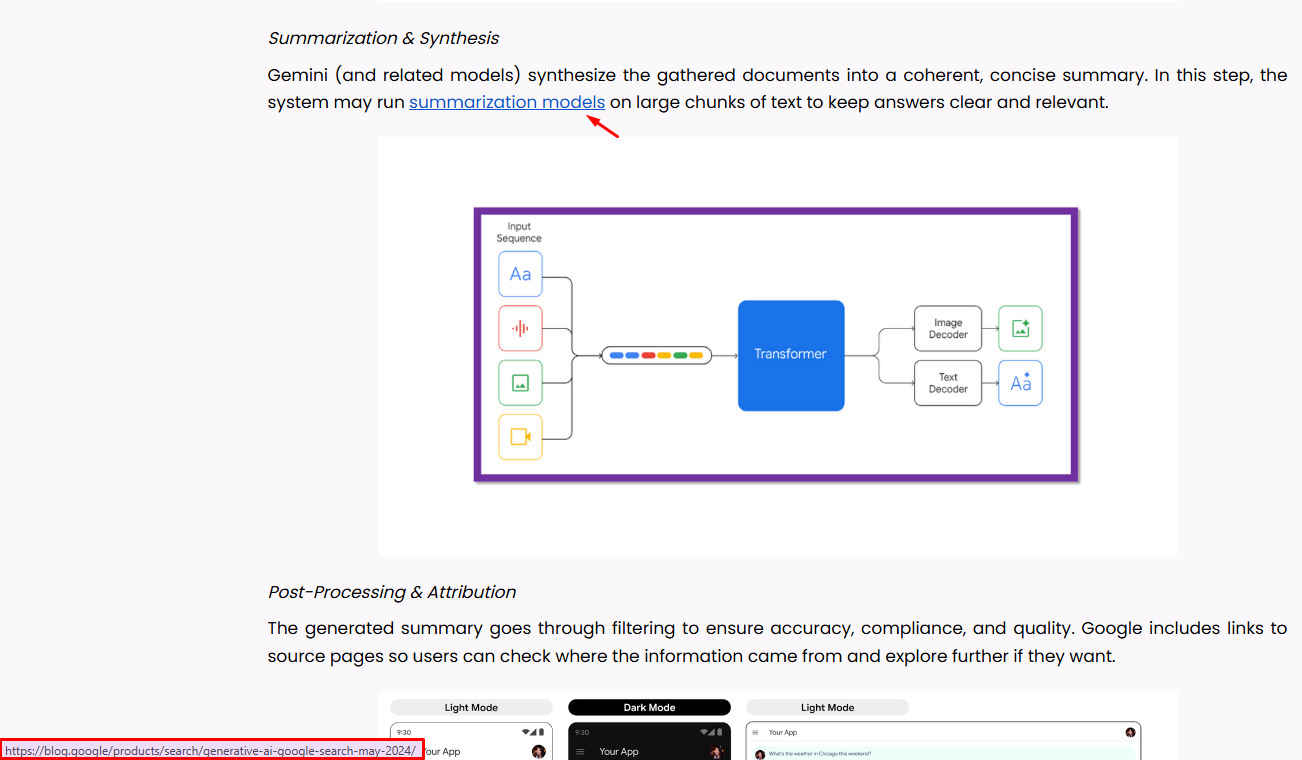
AI engines prefer low-risk sources. Pages that show evidence (primary references, official docs) and visible freshness (“Last updated”) are safer to quote. For stores, this matters for specs, safety info, ingredients, pricing, and regional availability.
How to implement:
- Place a source immediately after important claims (e.g., material certifications, SPF ratings, safety standards).
- Link to primary references (manufacturer spec sheet, lab testing, regulatory bodies), not just blogs.
- Add “Last updated” near the top; update pricing, versions, and discontinued SKUs promptly.
- Maintain a single source of truth for specs to keep facts consistent across PDPs, PLPs, and guides..
Tip #4: Structure for machines: schema + clean technical basics
Schema helps machines understand entities, steps, and relationships; clean technical SEO ensures your content is crawlable and stable. Together, they make extraction more reliable, improving your odds of being cited in AI answers. SearchPie is one of the best all-in-one SEO apps for Shopify to operationalize this: it helps you add and validate JSON-LD schema (Product, FAQPage, HowTo, Article), tidy titles/meta, surface duplicate/thin pages, and suggest internal links… By that, your “answer-first” content is easier for AI to parse and cite.

How to implement:
- Add JSON-LD that matches intent: FAQPage for Q&A sections, HowTo for step-by-step usage/care, Product for PDPs (with offers, reviews, availability), Article for guides.
- Keep titles/H1s unique and descriptive; avoid duplicate meta and thin near-duplicate pages across variants.
- Optimize Core Web Vitals, especially CLS (layout shift) that can break parsing. Choosing one of the fastest Shopify themes is often the quickest way to solve these stability and speed issues.
- Use clean, crawlable URLs; ensure important pages aren’t blocked and have logical internal links from category hubs and the answer-first blocks.
Tip #5: Design the next click and measure what matters

A citation without a click doesn’t move revenue. Your job is to guide the shopper from the AI answer to the most relevant page, then prove impact with the right metrics tied to answer engine optimization.
How to implement:
- Place 1–3 contextual internal links adjacent to the answer-first block: the top category, a curated collection, or a product finder/size guide.
- Add clear micro-CTAs near answers (“Shop stability shoes,” “Find your size,” “Compare HEPA models”).
- Track appearance/citation rate by engine (AI Overviews, Perplexity, Copilot, ChatGPT), AI-referred sessions, assisted conversions, and revenue from cited landing pages.
- Review losing queries monthly: check answer clarity, sources, freshness, and whether a better landing page should be linked.
Conclusion
The way people search has changed. Answer Engine Optimization (AEO) doesn’t replace Search Engine Optimization (SEO), it’s an extra layer that helps you get cited by AI. In the digital era, shoppers ask AI for quick answers, compare options in summaries, and click the cited links they trust. That’s why now is the right time to combine AEO + SEO: keep SEO for durable rankings and demand capture, and add Answer Engine Optimization to win in-answer visibility and one-tap traffic. For more latest updates from Google, don’t hesitate to follow us!
FAQs
1. What is AEO?
Answer Engine Optimization (AEO) is the practice of optimizing a page so AI answer engines (Google AI Overviews, Perplexity, Microsoft Copilot, and ChatGPT) can extract a clear, accurate answer and cite your site. In short, it puts your brand inside the answer, making it one tap for visitors to reach your store.
2. What’s the difference between Answer Engine Optimization and traditional SEO for an online store?
SEO tries to rank on search pages. AEO tries to show up inside AI answers and get quick “one-tap” visits. Do both for the best results. SEO is great for long-term demand capture, AEO puts your brand at the exact decision moment inside the summary. Use both together: SEO for durable traffic and revenue, AEO for in-answer visibility where zero-click behavior is rising.
3. How do I know if my pages are being cited inside AI answers (and where can I see it)?
Search real queries in AI search engines (AI Overviews, Perplexity, Copilot, and ChatGPT). If your brand or URL appears in the answer or citation list, you’re in. Track results in a simple spreadsheet.
4. Which pages should I optimize first for AEO?
Start with pages that move the needle:
- Top revenue pages: best-selling PDPs and high-traffic collections.
- High-intent guides: “best for…”, “how to…”, “which is better…” buying guides.
- FAQs/how-to content: sizing, care, setup—easy wins for answer-first blocks.
- Low-CTR but high-impression pages: pages that show often but don’t get clicks.
- Upcoming/seasonal launches: get answer-first content live before demand spikes.
- Add a 50–80 word answer at the top, link to the next best step (collection/product/size guide), add schema, and track citation rate and AI-referred sessions.
5. Do I need schema on every page for AEO?
No, you should prioritize the pages that matter most. Add Product to best-selling PDPs, FAQPage to common questions, HowTo to usage/care guides, Article to buying guides, and CollectionPage/ItemList to key collections. Start with high-intent and high-traffic URLs, then expand once those earn citations.