

In Part One, you learned Google E-E-A-T stands for Experience, Expertise, Authoritativeness, and Trust. It is the framework Google uses to evaluate whether a website is credible enough to appear in search results and AI-generated summaries. But the real challenge is turning E-E-A-T into practical actions that improve your site’s visibility in AI-driven search environments. In this guide, we’ll walk through how to translate E-E-A-T into concrete optimizations across content, structure, authority, and technical signals.
Summary:
- Section 1: We begin by translating Google E-E-A-T (Experience, Expertise, Authoritativeness, Trust) into practical actions that improve visibility in AI-driven search environments.
- Section 2: Next, we map each E-E-A-T pillar to specific optimization areas, including content quality, structured data, entity signals, and technical reliability.
- Section 3: Then we provide a simplified checklist to help you implement E-E-A-T across real experience, expertise, authority, trust, structure, internal linking, and commerce data.
- Section 4: Finally, we introduce tools and workflows that help maintain these signals consistently, ensuring your website remains eligible for AI search visibility over time.
Table: Turning E-E-A-T into AI Search Optimization
To make E-E-A-T actionable, it must be translated into measurable structural and operational improvements. The table below maps E-E-A-T pillars to concrete optimization areas and AEO execution.
Google E-E-A-T Checklist: How to Optimize Your Content Strategy
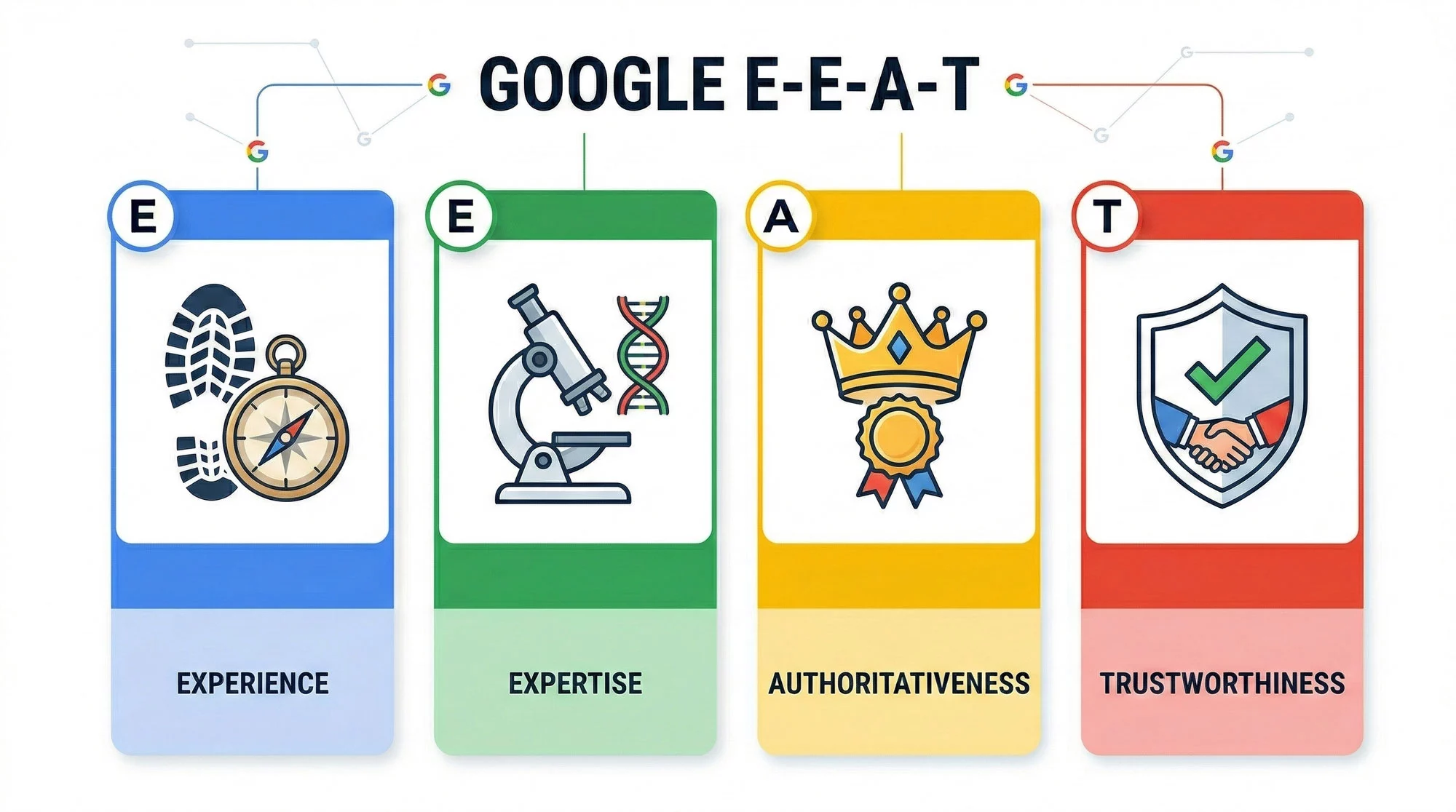
Before jumping into technical improvements, it’s important to understand that E-E-A-T optimization is holistic. It does not rely on a single feature or plugin. Instead, it requires aligning:
- Content quality
- Brand reputation
- Structural clarity
- Technical reliability
When these signals work together, your website becomes easier for search systems to evaluate, trust, and potentially surface in AI-generated results.If the mapping above defines what should be optimized, the checklist below explains how to execute those improvements in practice. This section focuses on tactical implementation across content, structure, authority, and technical integrity. Using the right combination of tools helps ensure your E-E-A-T signals remain consistent, measurable, and aligned with AI search requirements.
1. Establish Real Experience
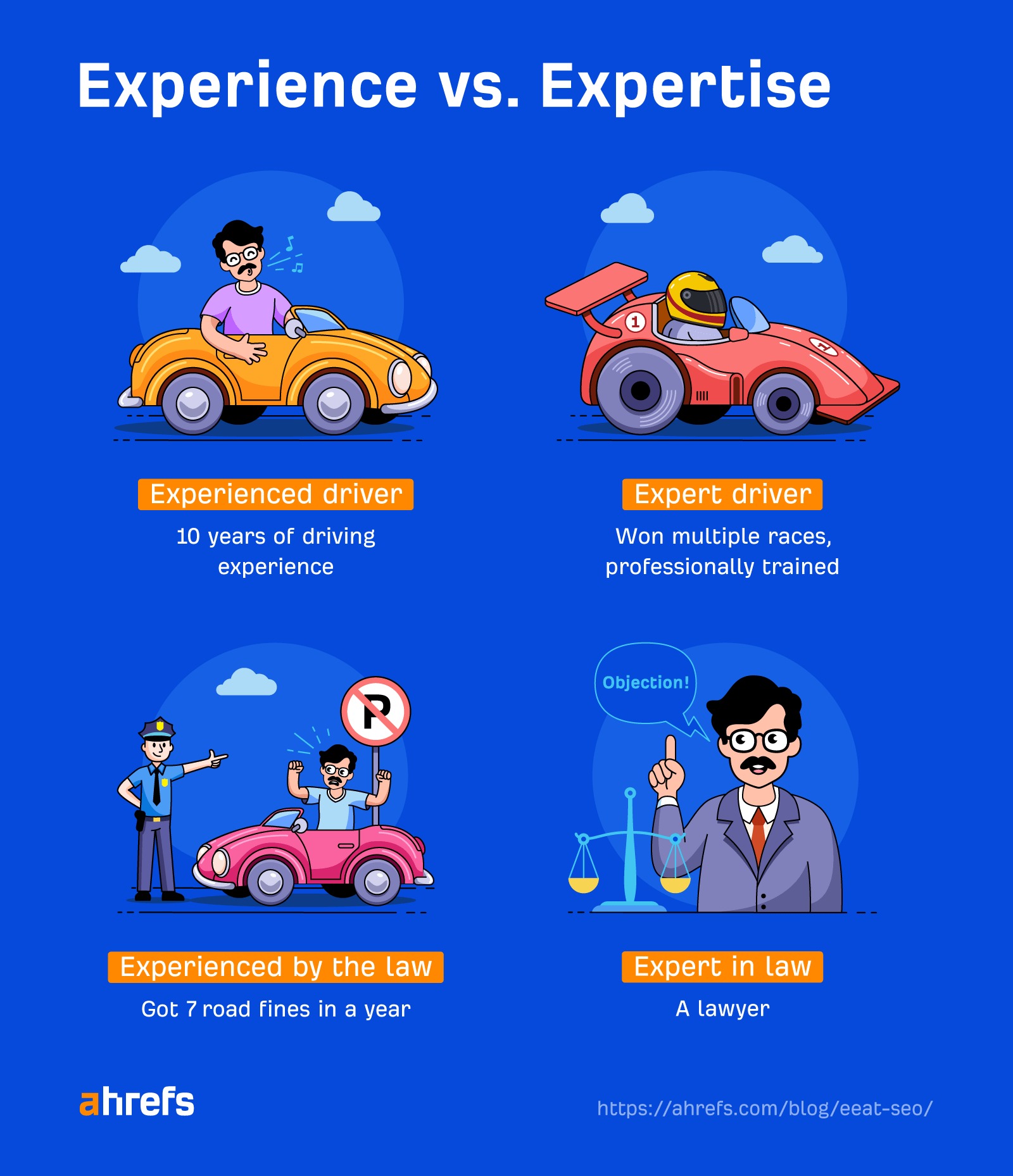
AI systems prioritize content that demonstrates first-hand knowledge and real implementation. Instead of repeating general explanations, include practical examples, screenshots, data insights, or real customer experiences.
Key actions:
- Add real case studies and examples
- Include screenshots or implementation walkthroughs
- Use customer reviews or testimonials as evidence
- Show practical outcomes rather than theoretical advice
2. Demonstrate Clear Expertise
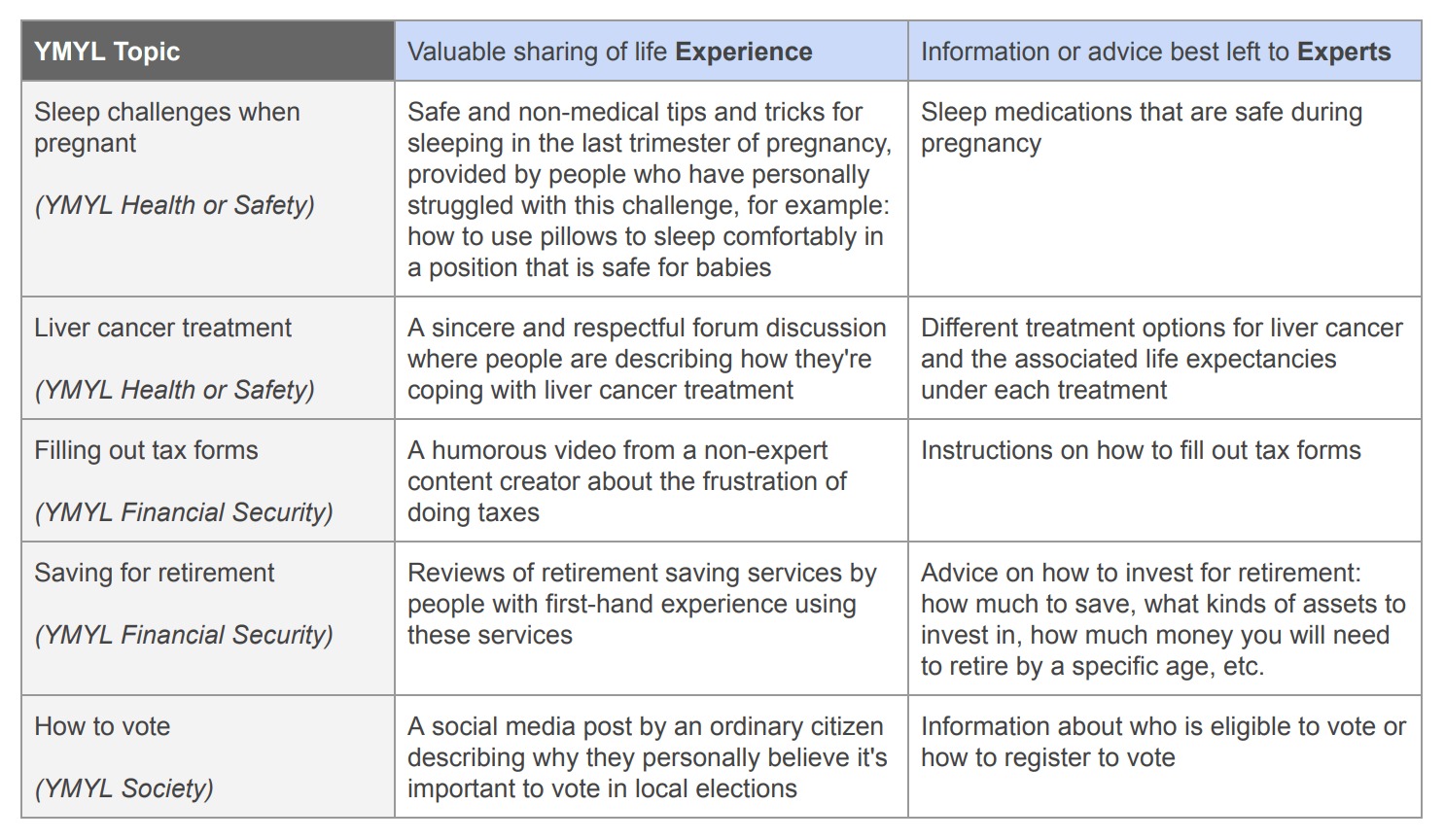
Expertise signals come from depth, accuracy, and clarity. Instead of providing simple definitions, explain concepts thoroughly and structure your reasoning logically.
Key actions:
- Provide detailed explanations and technical insights
- Include author credentials or professional background
- Cover subtopics to demonstrate subject mastery
3. Strengthen Authority Signals
Authority is built through external recognition. Search systems analyze backlinks, brand mentions, and consistent entity signals across platforms.
Key actions:
- Earn high-quality backlinks from reputable websites
- Maintain consistent brand presence across platforms
- Build a strong entity profile in Google properties
4. Reinforce Trust and Transparency
Trust signals show that your business is reliable and accountable. Clear policies, accurate information, and secure infrastructure all contribute to trust.
Key actions:
- Keep information updated
- Cite reliable sources when necessary
- Display contact information and policies clearly
- Maintain secure HTTPS infrastructure
5. Improve Structural Clarity
Search systems rely on clear structure to interpret meaning. Logical headings and structured data help AI systems extract and summarise your content accurately.
Key actions:
- Use consistent heading hierarchy (H1 → H2 → H3)
- Implement schema markup
- Organize content into clear sections
6. Optimize Internal Linking
Internal linking helps search systems understand topic relationships across your website.
Key actions:
- Link related pages using descriptive anchor text
- Avoid orphan pages
- Build topic clusters around key entities
7. Maintain Accurate Commerce Data
For ecommerce websites, data accuracy is critical. AI shopping systems rely on structured product information to determine eligibility and visibility.
Key actions:
- Ensure accurate product pricing and availability
- Maintain clean product feeds
- Monitor feed errors regularly
8. Monitor Technical Health Continuously
Even small technical issues can weaken trust signals over time. Continuous monitoring ensures your website remains stable, crawlable, and AI-ready.
Key actions:
- Fix broken links
- Remove duplicate content
- Maintain strong site performance
Table: Tools Summary for E-E-A-T Optimization
Extended Insights: How SearchPie Helps Improve AI Visibility
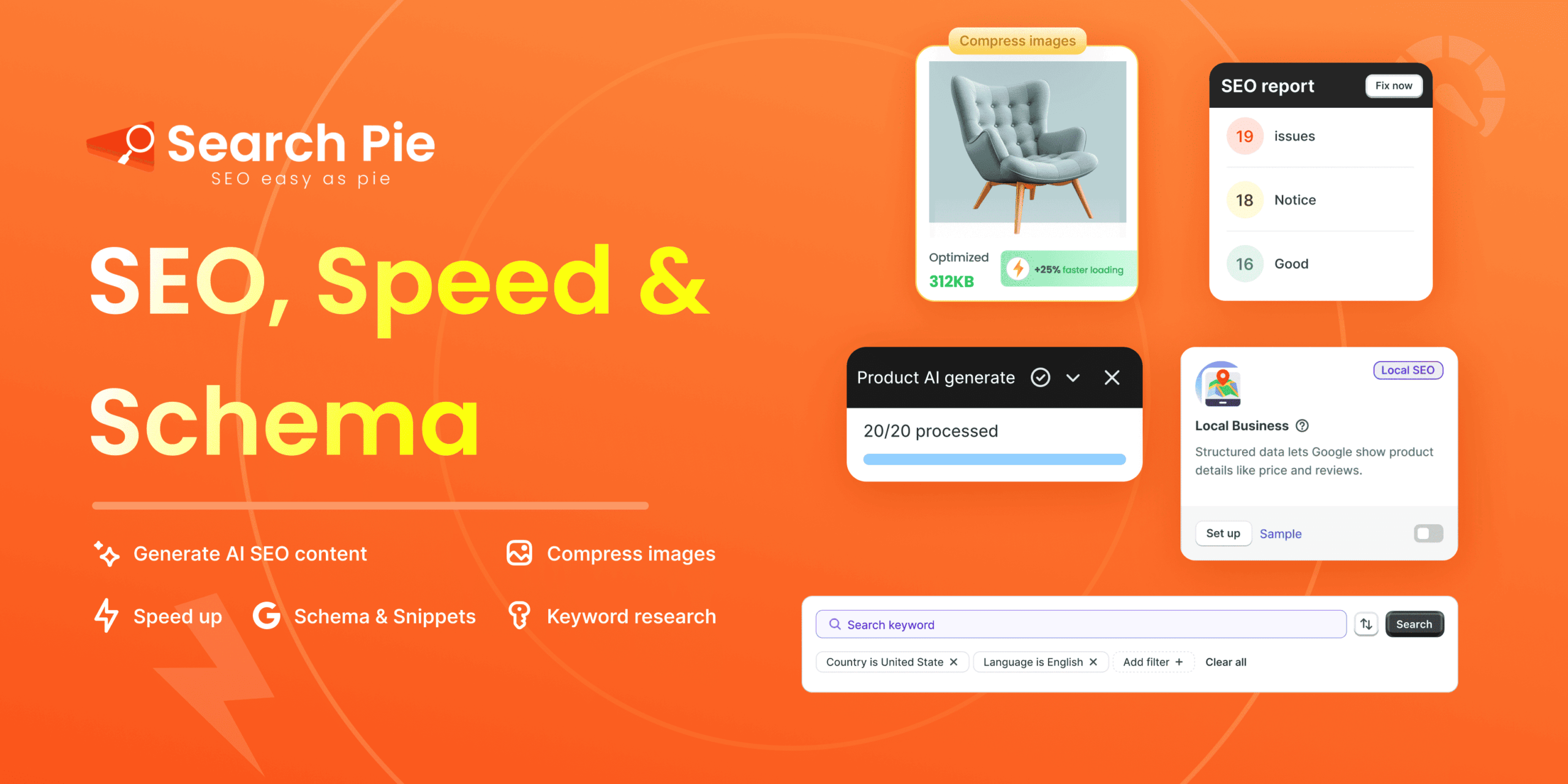
In AI search environments, SEO signals must stay consistent, structured, and technically reliable over time. Tools like SearchPie can help merchants maintain these signals more consistently by organizing tasks such as structured data management, internal linking, and product feed validation into a unified workflow.This workflow ensures your store remains:
- Structurally clear for search systems
- Entity-aligned across Google platforms
- Validated through Merchant Center
- Technically stable for AI extraction
SearchPie doesn’t replace content strategy or authority building. Instead, it supports them by keeping product data, schema, and technical signals consistent, helping search systems recognize and surface your content in AI-driven results.
Install NowConclusion
In an AI-driven search landscape, visibility is earned through consistent structural clarity and maintained credibility signals. E-E-A-T provides the framework, and AEO turns it into action through structure, authority, and data accuracy. Stores that strengthen credibility and technical clarity today will be more resilient, visible, and competitive in AI-generated search results tomorrow.
FAQs
1. How long does it take to see results from E-E-A-T optimization?
E-E-A-T improvements typically impact visibility gradually. Authority and trust signals strengthen over time as reputation, structure, and content depth improve.
2. Should small ecommerce stores care about E-E-A-T?
Yes. E-E-A-T applies to all websites. Even smaller stores benefit from improving structured data, product accuracy, internal linking, and transparency.
3. Is structured data mandatory for E-E-A-T?
Structured data is not explicitly required, but it strongly supports clarity and extractability, which improves how search systems interpret your content.
4. What is the biggest mistake when optimizing for E-E-A-T?
Focusing only on content length or keyword density. E-E-A-T requires credibility signals, not just more text.
5. How does E-E-A-T relate to AI search visibility?
AI systems prefer content that shows real experience rather than generic explanations. Strengthening E-E-A-T signals increases your eligibility to be cited or referenced.